Inspirational Wallpaper: June

When we think of June we think of bright sunny days and life in full bloom, which is precisely what we were looking for in this choosing this month’s wallpaper. We hope it gives you nothing but warm summer vibes like it does for us. We wish everyone a happy, fun-filled June.

IMG_1737

Tree in Bloom

If you liked this post please follow us and share!

Instagram


Ramadan Decor: Moon-Phase Garland

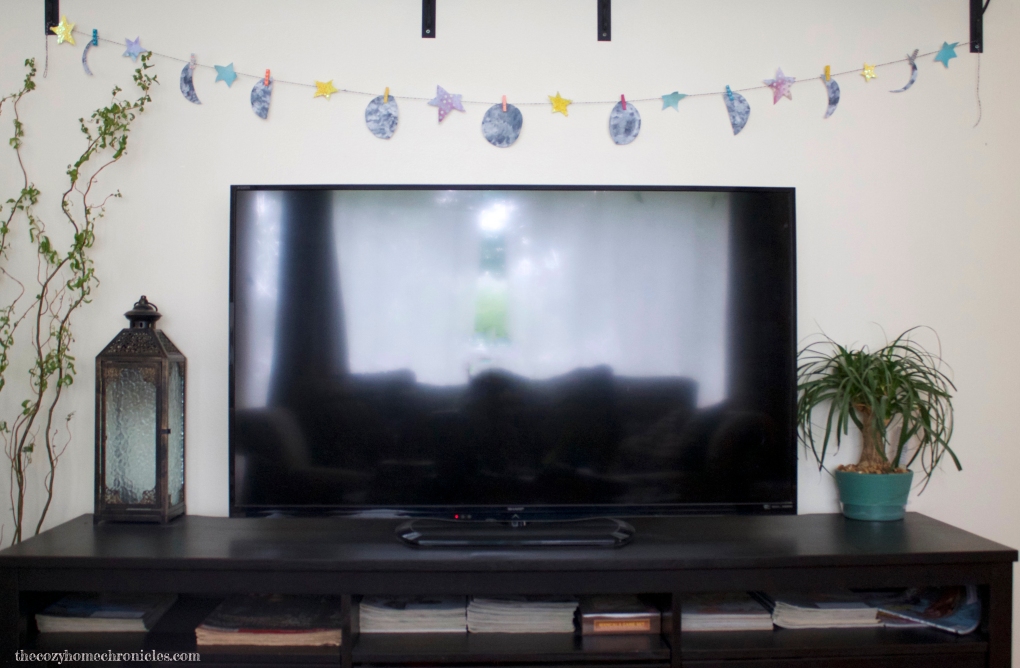
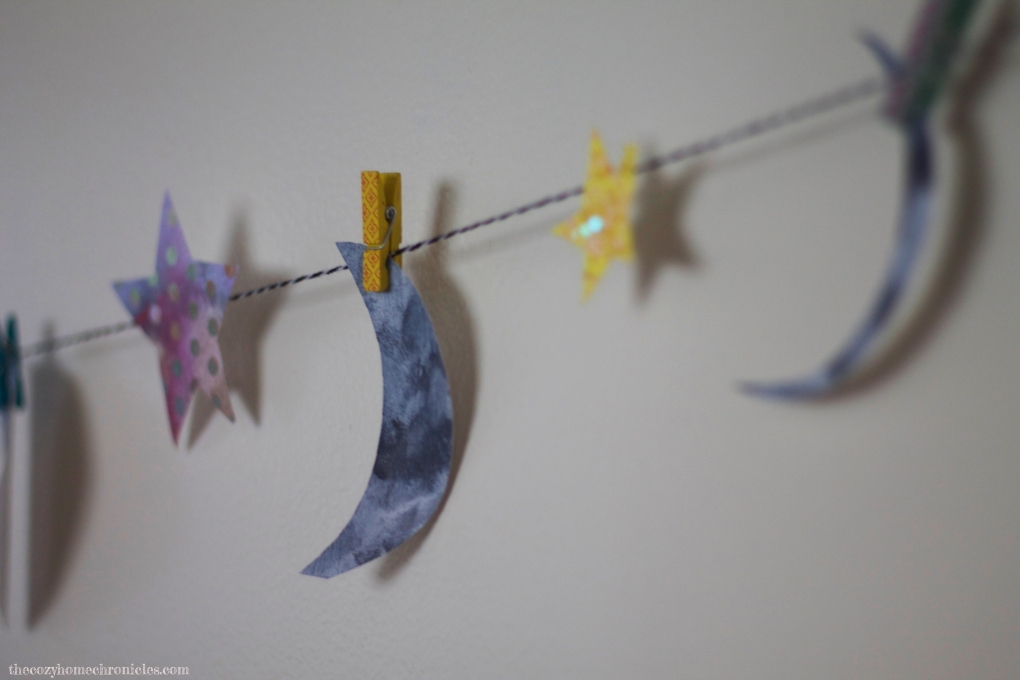
The month of Ramadan is set to begin this week and I have been brainstorming countless ways to make it more special and festive for our family. Decorating is obviously one really fun way to do this (especially if you have young children) but it seems the selection of Ramadan decor out there is a bit too generic (think green and white and palm trees). Since as Muslims we follow a lunar calendar, and Ramadan begins and ends with the sighting of the new moon, I thought it would be really nice to capture the beauty of phases of the moon. Not only is this garland super cute and simple to put together but making it is a great way to bring the family together for a creative activity that inspires reflection on the wonders of astronomy.

IMG_2167

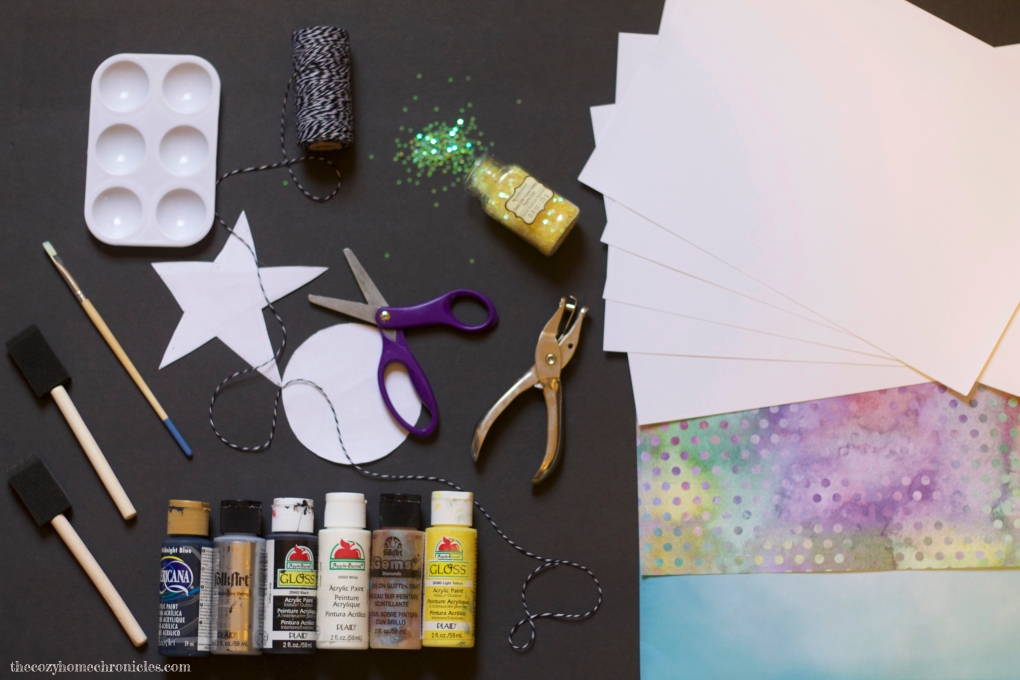
Supplies
Paper (plain white textured and assorted colors)
Acrylic paints (Any shades of gray, white, clear glitter, and yellow)
Paint brush and foam brushes
Scissors
String
Adhesives (tape and glue)
Mini clothespins
Glitter

Directions

IMG_2073

Gather your supplies

IMG_2087

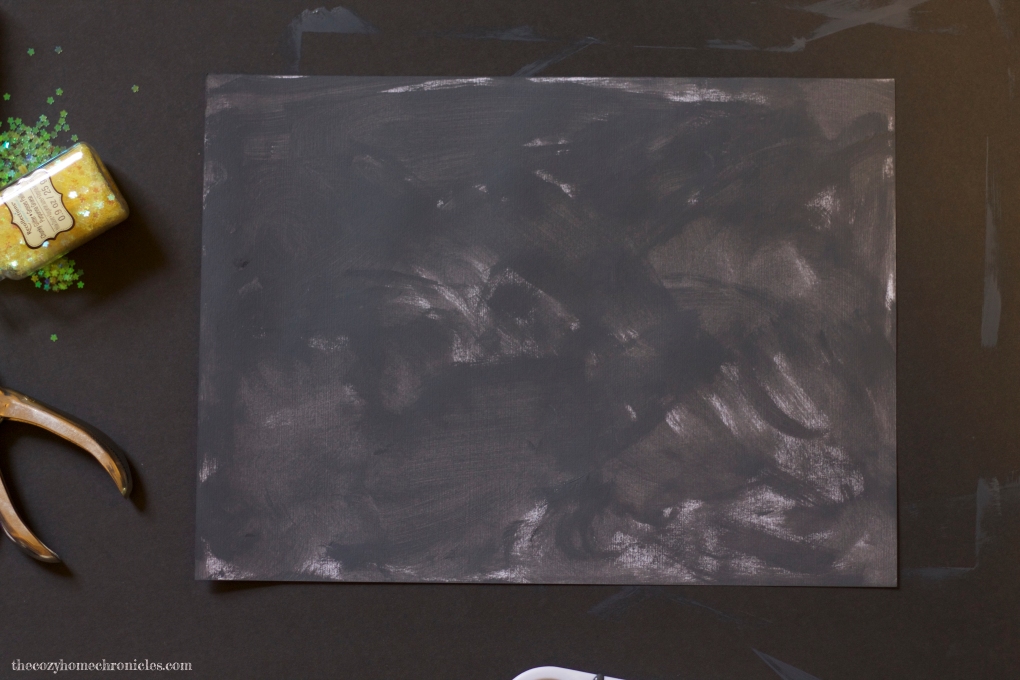
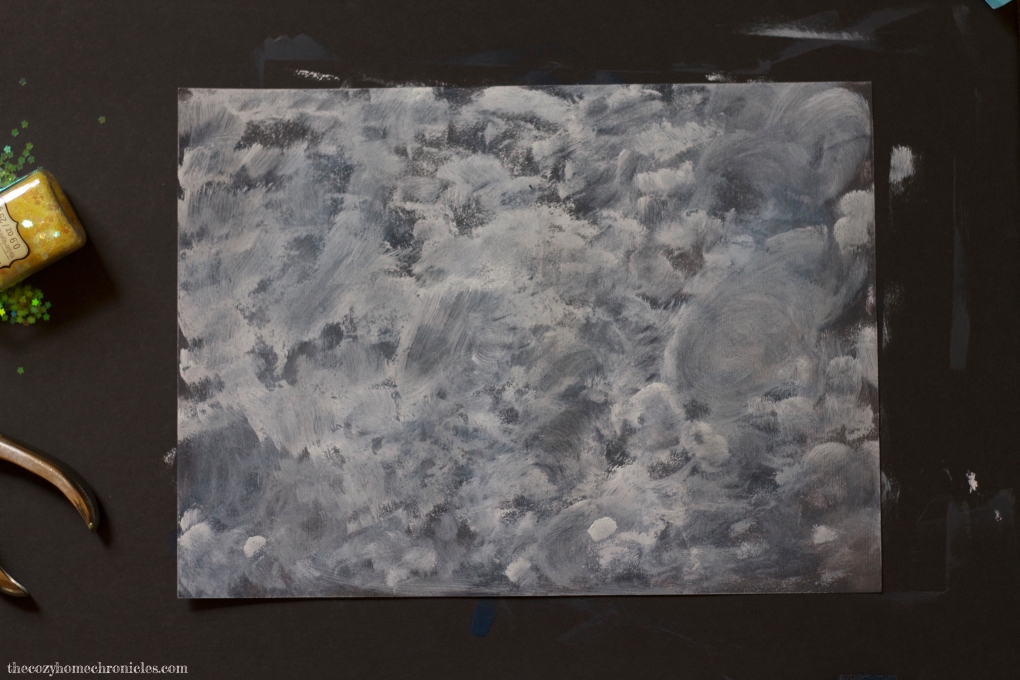
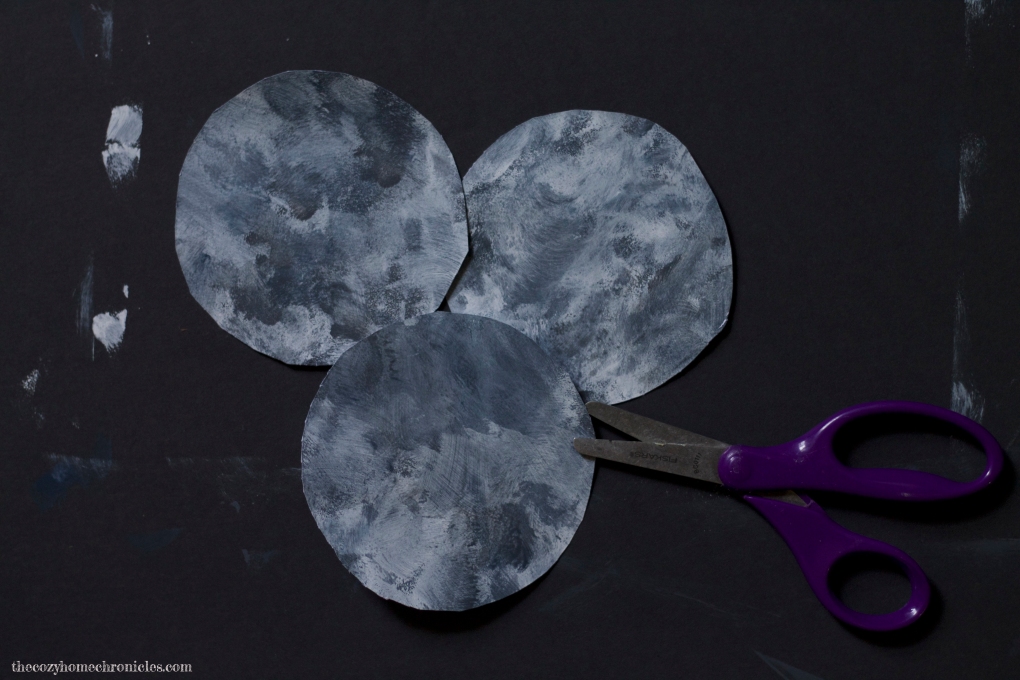
On the textured white paper, paint with the foam brushes beginning with the darkest gray colors and ending with white.

IMG_2091

Make sure you let each layer dry before painting the next. By the time you are done, you will have a pattern that resembles the surface of the moon.

IMG_2092

Cut out  6 circles to the size of your liking. You don’t want them too big so the garland doesn’t droop when you hang it. My circles had a radius of about 2 inches.

IMG_2099

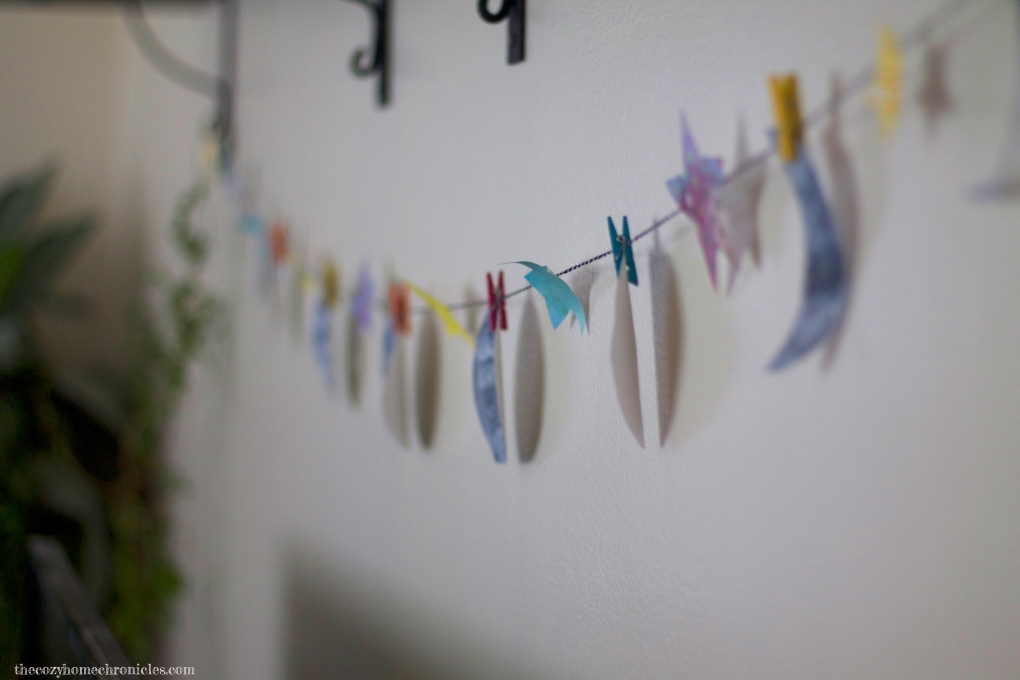
Cut 5 of your 6 circles down until you have the 9 moon phases. These pieces will be arranged just like this on the garland.

IMG_2105

Cut out some rustic looking stars and decorate with glitter (optional) and arrange the pieces for assembly.

IMG_2146

Using glue, tape, clothespins (or a combination of them), assemble your stars and moons on a sturdy piece of string, making sure they are evenly spaced.

IMG_2157

Hang up your beautiful garland prominently in your family room.


IMG_2167.jpg

Enjoy the lovely view!

“Indeed, in the creation of the heavens and the earth and the alternation of the night and the day are signs for those of understanding [3:190].”

If you liked this post please follow us and share!

Instagram


Build your Own Garden Fence

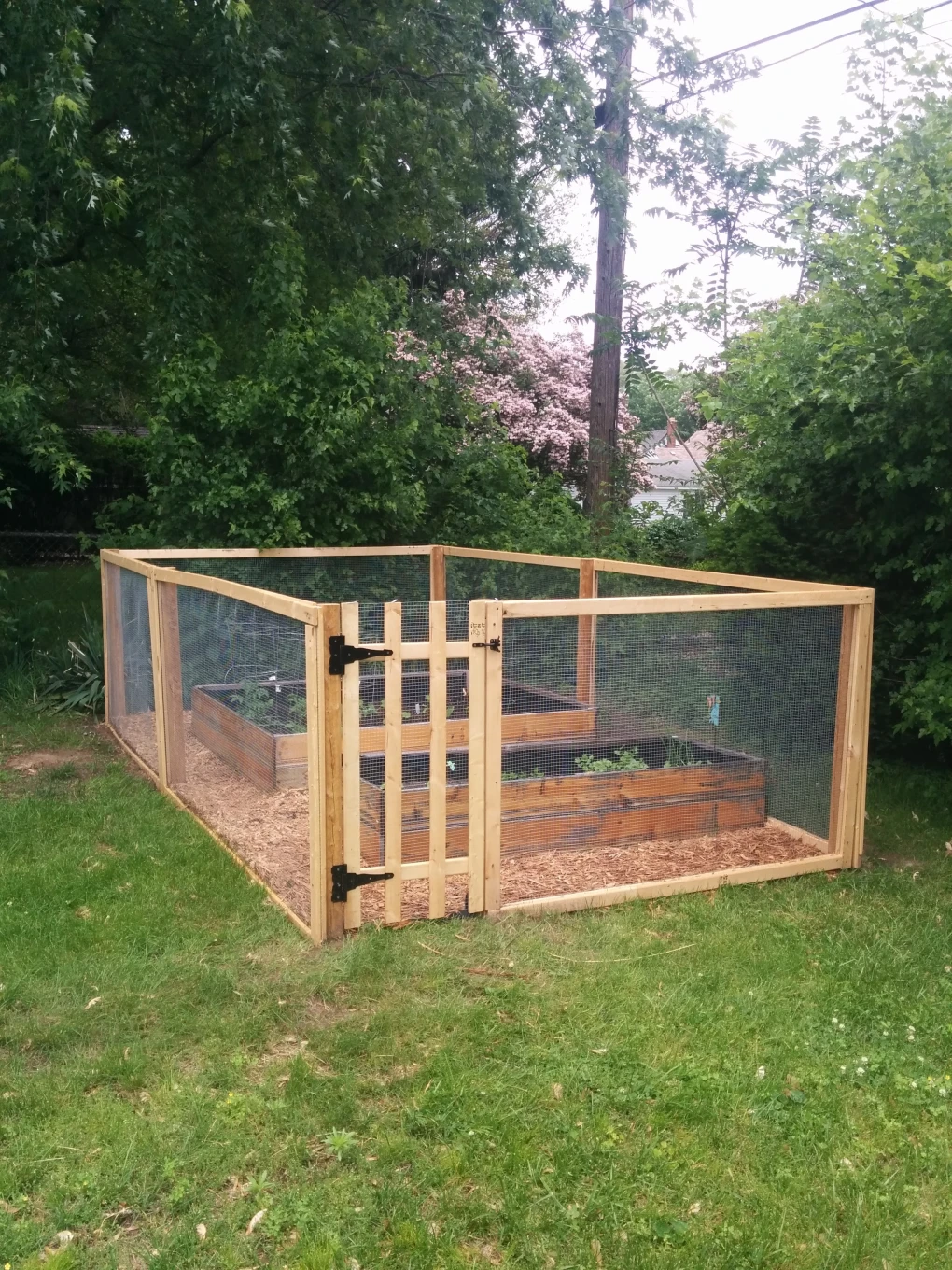
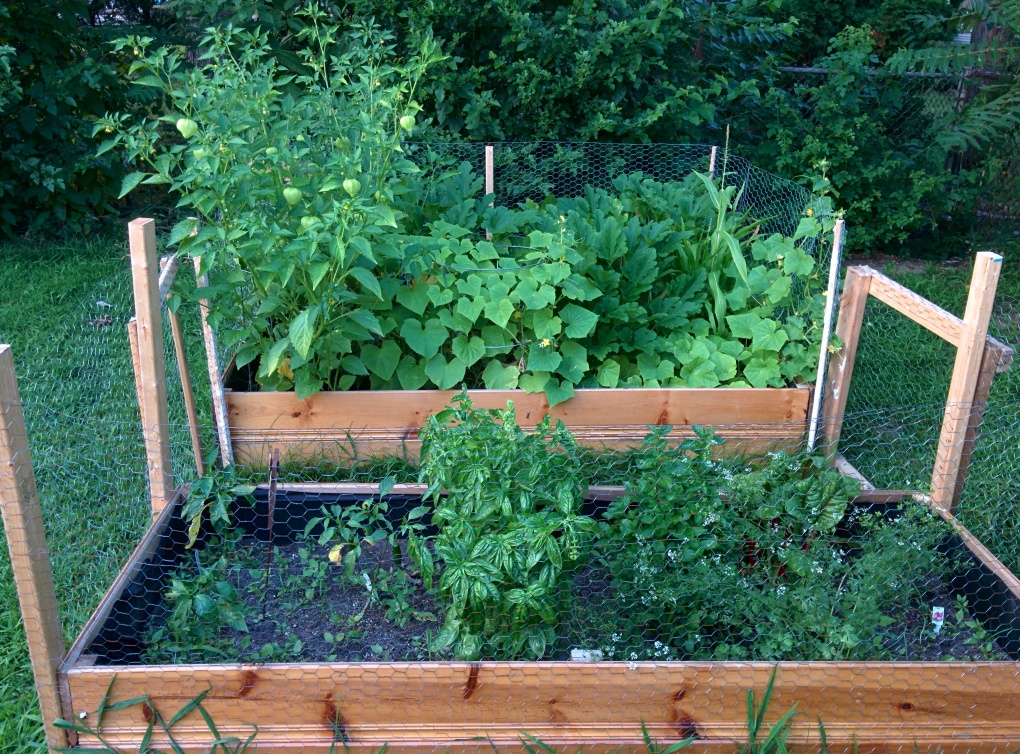
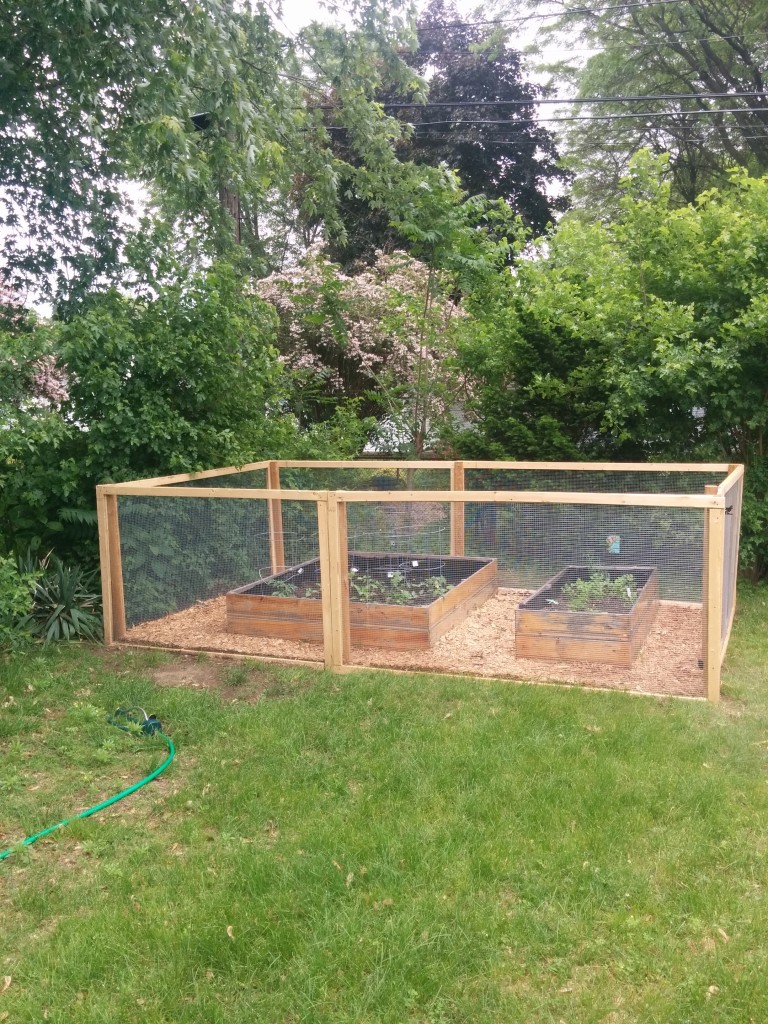
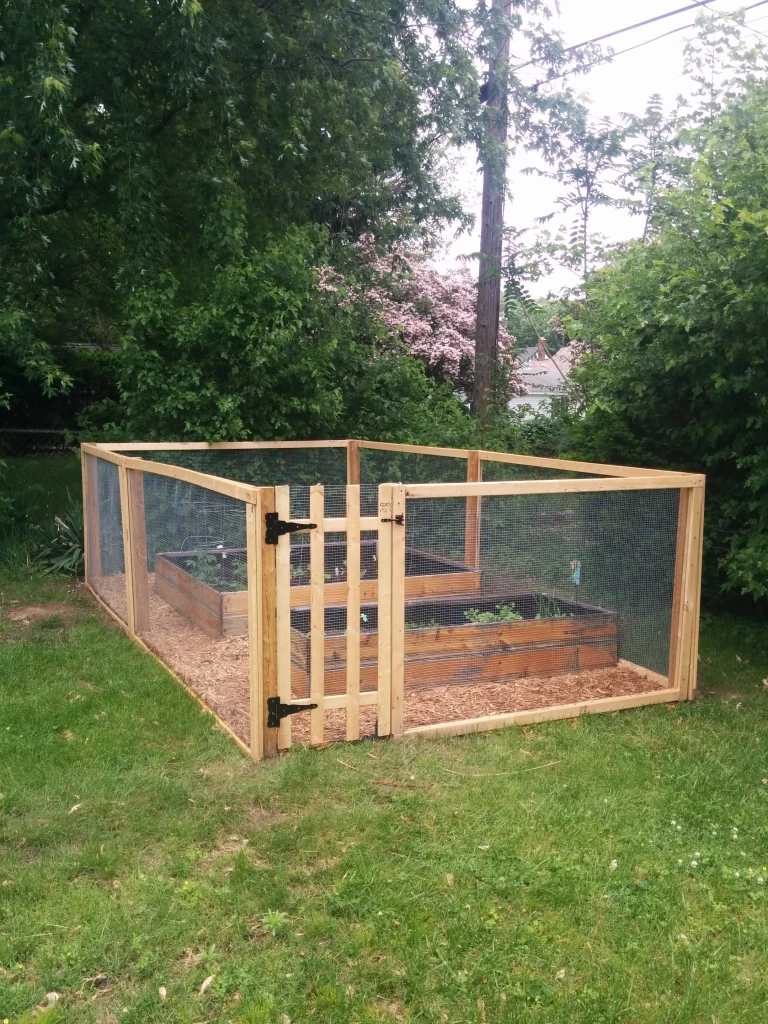
If you read our previous blog post on how to build a raised garden bed on a budget, then you might be wondering how we have kept our harvest safe from unwanted visitors. Initially we went with a cheap fence made of galvanized poultry netting but after many missing tomatoes and half-bitten squash we decided that the next year we would spend a bit more to have a quality fence. We wanted a roomy enclosed space with easy access for us to plant but sturdy and tall enough to keep the demon bunnies out. I soon sketched out a blueprint for my imagined firewall and got to work making it a reality. I will warn you that it is a bit on the pricier side but it’s a sound fence that’s practical and aesthetically pleasing. Shall we get to work?


IMG_20140720_201426

Our sorry excuse of a fence

Supplies for an 12ft x 8ft garden fence
2.5 x 2.5 x 8ft  ($27.79)
24 2 x 4 x 8ft ($80.88)
1/2 x 4ft x 25ft Hardware Cloth ($38.98)
1 box Wood Screws ($6.26)
1 Fence Door Hardware ($15.98)

Tools
Staple Gun
Post Hole Digger
Miter Saw or Hand Saw
Power Drill

Directions

  1. Design a template for your fence because this saves you on both time and money. The desired size of the enclosure will dictate how much wood you will need and in turn how much you will spend. I can’t stress enough how important the planning phase is for any successful project.
  2. Cut the 2.5 x 2.5 x 8ft timber to 7 ft. 5ft of the timber is for the fence sections since the hardware cloth is only 4ft tall and the remaining 2ft is going into the holes you will dig to secure the fence.
  3. Using the post digger, dig seven holes (3 on each side and an extra one for the door) about 2 ft deep. I did not use cement to secure the timber posts because I find it unnecessary but feel free to use cement if you like!
  4. Once you have dug your post holes, insert the timber poles leaving 5ft above the ground. Make sure the poles are level by laying a 2×4 or a longer piece of wood across the posts while placing a level on top of it.
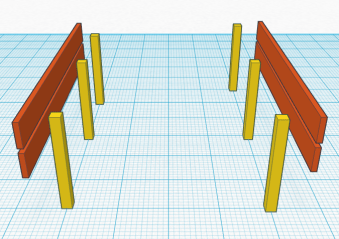
  5. The next step is to assemble the sides of the fence by using the 24 pieces of 2x4in x 8ft pieces to make rectangular frames:
    • Cut a total of four 2 x 4 x 8ft to a height of 5 ft (current they are 8 ft). These will be the vertical sides of your frame. The hardware cloth is 4 ft and that is your height unless you want the hardware cloth to be shorter.
    • Cut a total of four 2 x 4 x 8ft to your desired width. I cut mine to 6 ft because I needed the width of the fence horizontally to be 12ft.
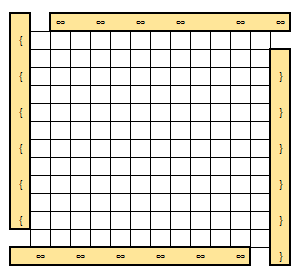
    • Now that you have four 4ft and four 6ft pieces lay them out according to the design in Figure 1.  You must follow that design if you want to keep the fence sturdily joined together. This also keeps the ends from bending.
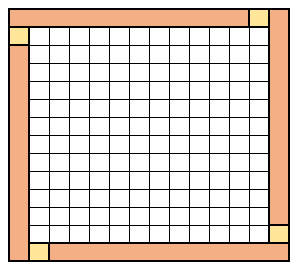
    • Lay the hardware cloth flat on top of your bottom piece of your boards (see Figure 2 ) and fasten using your staple gun.
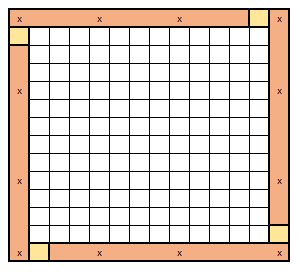
    • Proceed by laying the top pieces of your board over the hardware cloth/bottom frame and join the boards together using wood screws (see Figure 3).
    • Flip the completed fence frame gently and screw the other side as well (see Figure 4).
  6. Repeat Step 5 until you have enough sections to enclose your garden. I needed to repeat the  step six times. If you are unsure about your calculations try attaching your fence side to the post first and proceed by building then attaching rather than building all the sides and attaching them at the end.
  7. Now you can attach the completed fence sides to your 5ft timbers posts using a drill and wood screws.
  8. Create a basic door using the leftover 2 x 4 x 8ft by cutting them until you have two 2ft and four 5ft pieces. Align the four 5ft pieces on the ground vertically and make sure the space between them is even. Place the two 2ft pieces one closer to the top and one closer to the the bottom, using wood screws to secure them. Last but not least cut a piece of hardware cloth to the size of your door and install it on the backside of the door. I used basic fence door hardware for the hinges and lock. Installation manual is included in the packing and is very straightforward.
  9. For an overall cleaner look, use mulch, wood chips or small stones between the garden bed(s) and fence.
  10. Enjoy the fruits of your hard labor without bunny or deer bite marks.
    newfence

    Figure 1 – Bottom, Top & Hardware Cloth

    fencedesign2

    Figure 2 (Spacing for visualization)

    fencedesign3

    Figure 3 (w/o spacing)

    fencedesign4

    Figure 4 (w/o spacing)

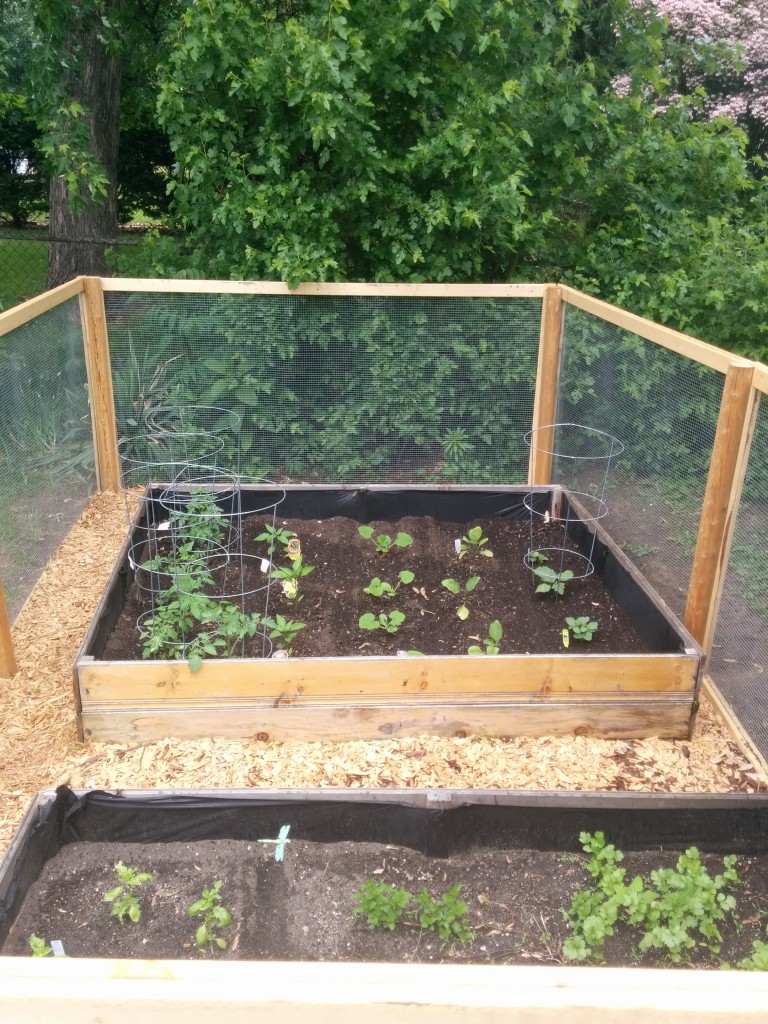
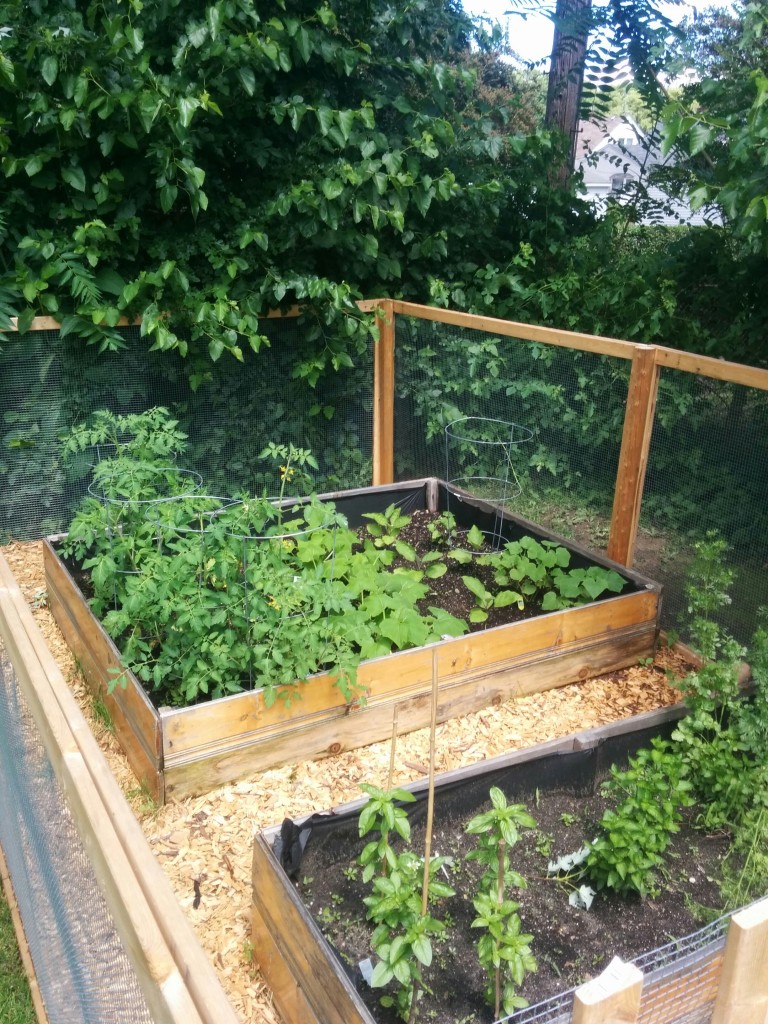
IMG_20150529_125008IMG_20150529_125016IMG_20150529_125023IMG_20150623_132751

If you liked this post please follow us and share!

Instagram


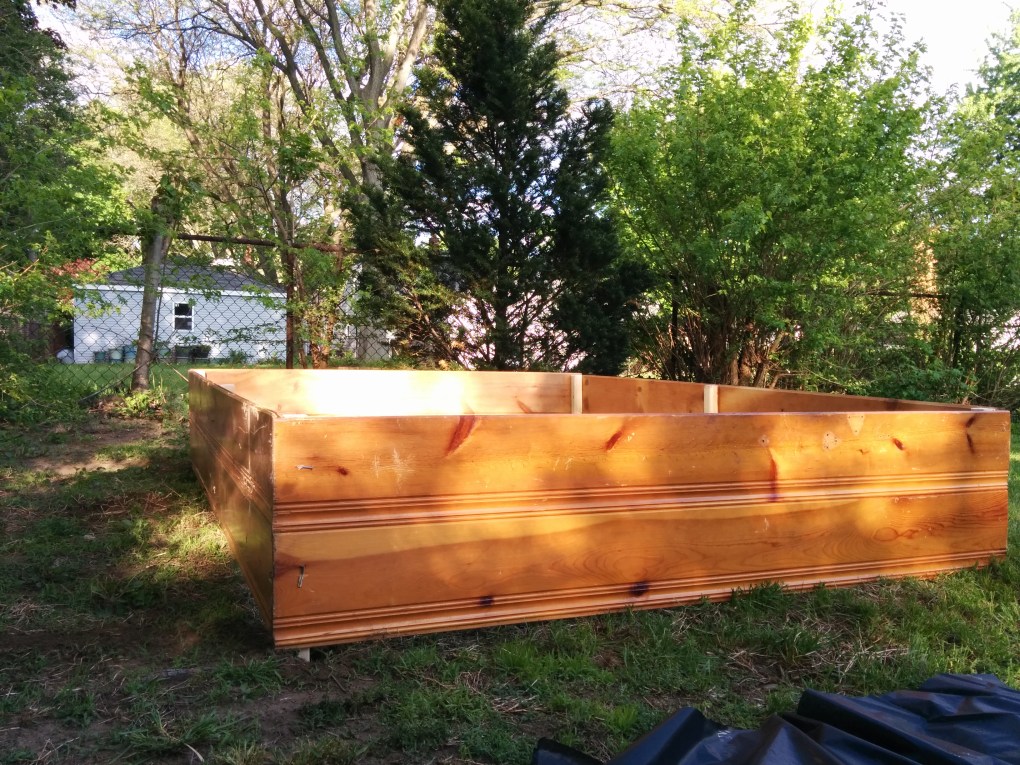
Build Your Own Raised Garden Bed

Spring is finally in the air here in Michigan and we are getting closer and closer to planting season, one of our favorite times of the year. Gardening for us is just so fun and fulfilling because it connects us to the beauty of nurturing and growth. If this is the year you decided to try your hand at gardening then starting with a raised bed might be the way to go. A custom raised vegetable/fruit/herb garden is not only easy to make but it takes a lot of the hassle out of gardening in terms of weeding and messes. It also makes for a beautiful backyard feature and less back-bending and back-breaking work.

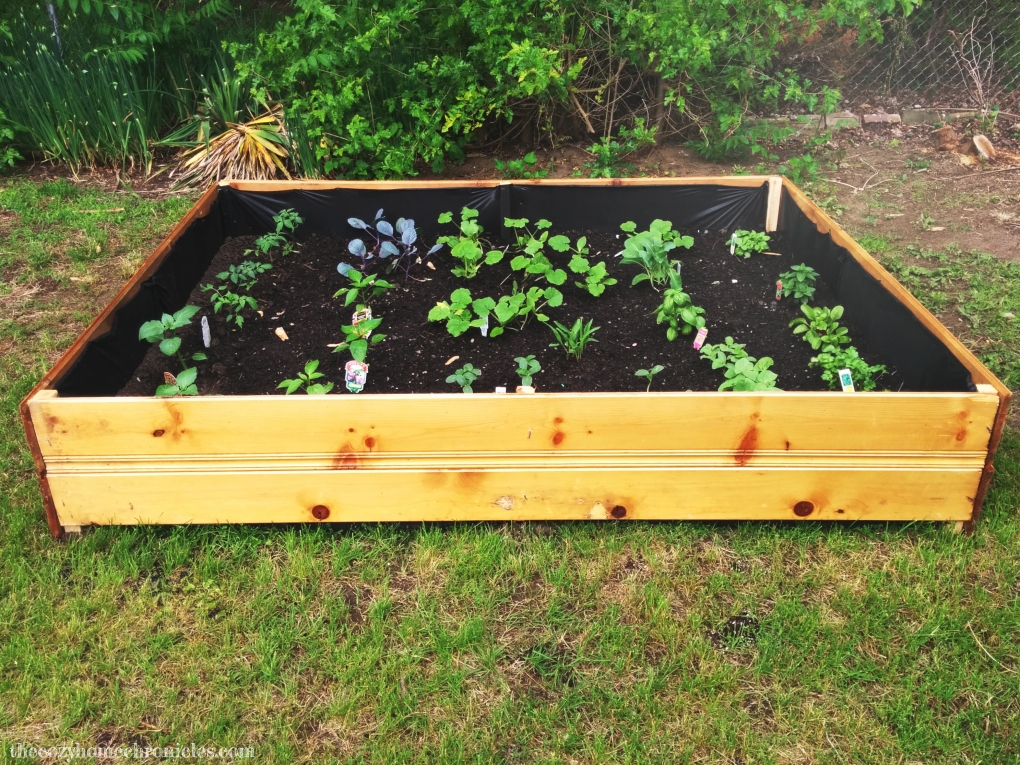
garden bed copy copy

You can go about this project a couple different ways but the instructions I have provided in this post are for store-bought wood from your local Home Depot or Lowe’s. For our garden beds, we upcyled wood panels that we had stored in our garage from our early basement renovation and we personally recommend this route if you have unused wood just lying around. There is something extra rewarding about repurposing items and reducing waste and what better time to do that than during the environmentally conscience activity of gardening. Of course you can always buy a raised garden bed but where’s the fun in that? Not to mention, a store-bought garden bed can run anywhere from $100-$250 depending on the size and material. If you buy the wood yourself, you can have a similar garden bed for half the price and if you go the upcycling route it will cost you nearly nothing.

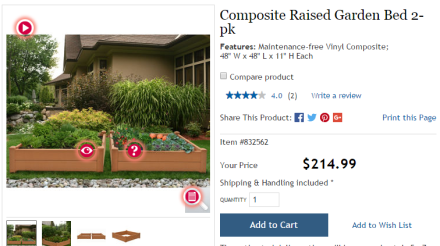
Costco Garden Bed

Costco – $107.50 / one

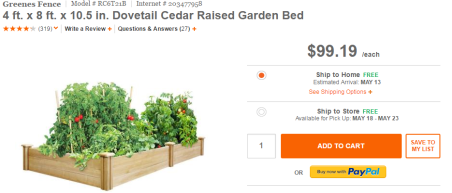
Home Depot Garden Bed

Home Depot – $99.19 / one

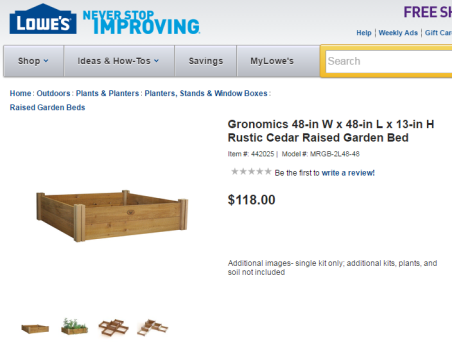
Lowes Garden Bed

Lowe’s – $118.00 / one


Now that we have you convinced (hopefully) to build your own garden bed, here’s what you’ll need:

Supplies for an 8ft x 8ft garden bed
2in x 6in x 8ft ($60)
2in x 2in x 8ft ($7.50)
Weed Blocker ($9.97)
1 box Wood Screws ($6.58)
Patience ($0.00)
Green Thumb (Priceless)

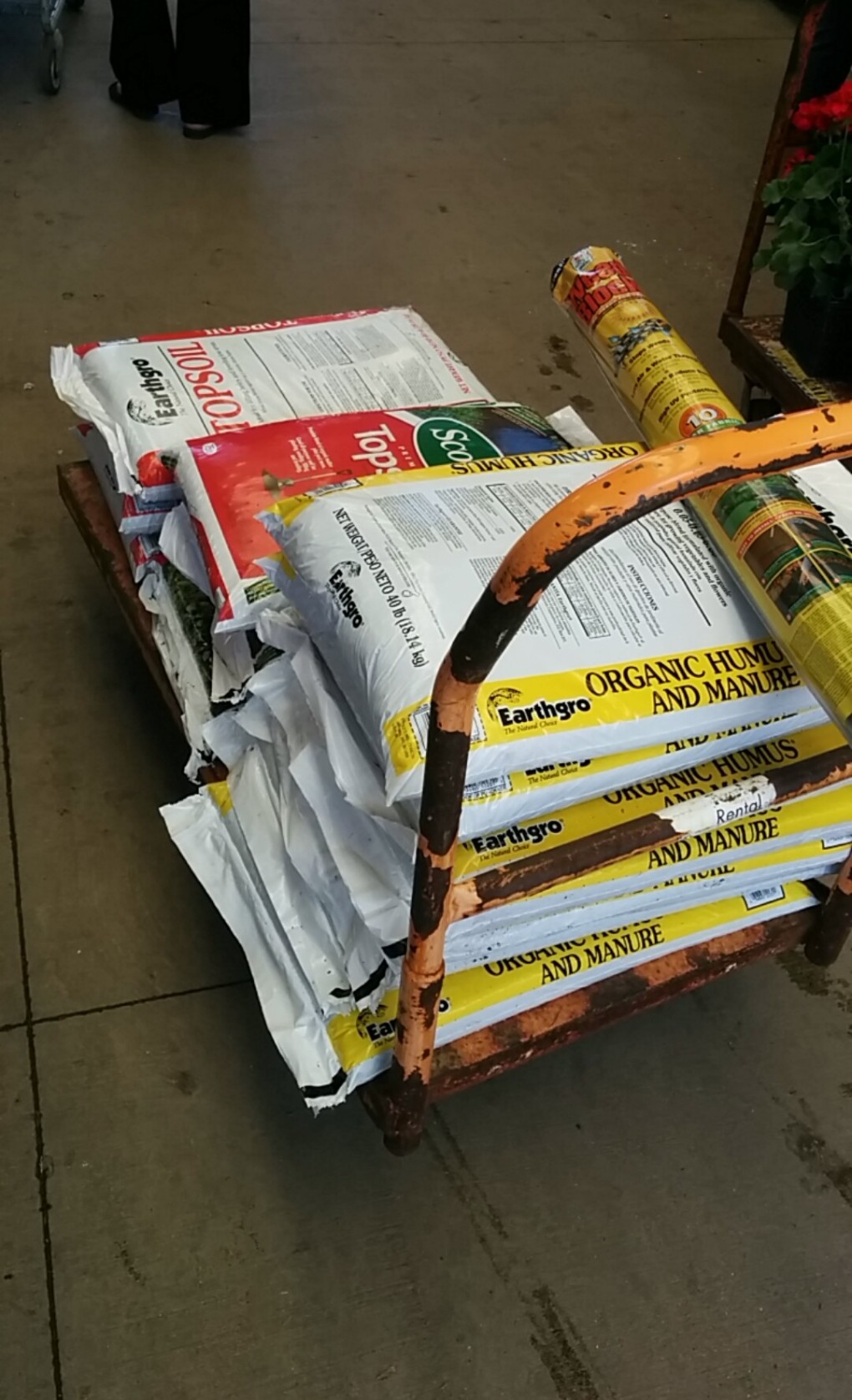
Note: I did not include the amount and price of soil in the supply list because that will really depend on the size of your bed. If you are unsure, this soil calculator is super helpful!

Tools
Staple Gun
Post Hole Digger
Miter Saw or Hand Saw
Power Drill

Directions

  1. Design the layout of your raised garden bed based on the shape and dimensions you want. Our wood panels were 6 ft long so our garden bed ended up being 6ft x 6ft.
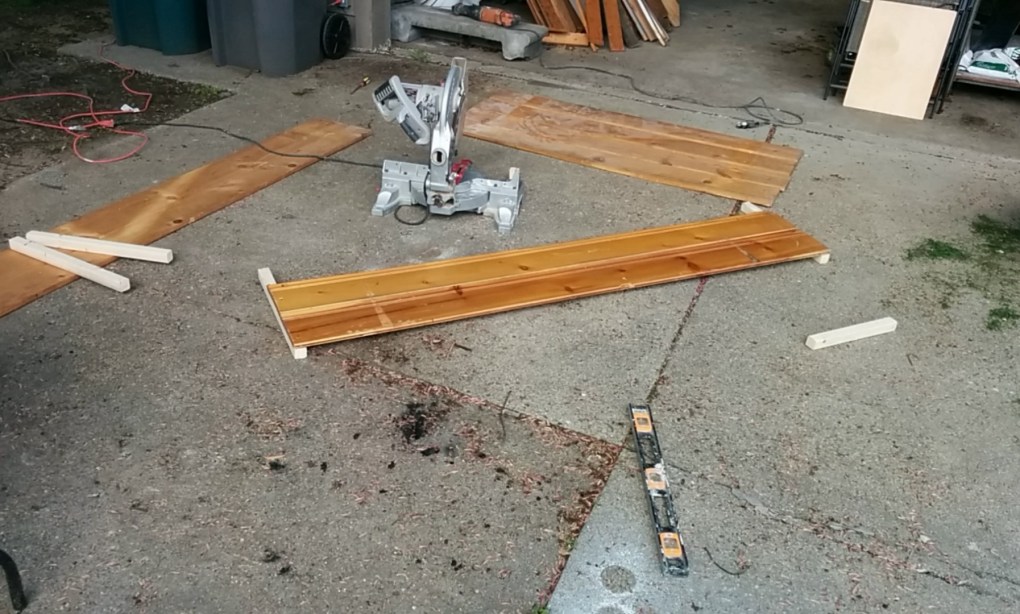
  2. If you chose a rectangular design and want to make cuts to the 2x6x8’s (or any other wood you are using), now would be the time to do so using a miter or hand saw. If you want a square 8ft x 8ft layout then just leave them as is. These pieces will be the side panels of your garden bed.
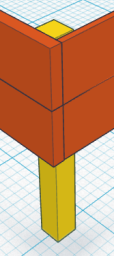
  3. Cut your 2x2x8s so that you end up with a total of six 2ft pieces (you’ll have some wood leftover). These will be the legs of your garden bed. You may notice that the garden legs are longer than the side panels and that is intended. The extra foot of leg is for planting the garden bed firmly in the ground.
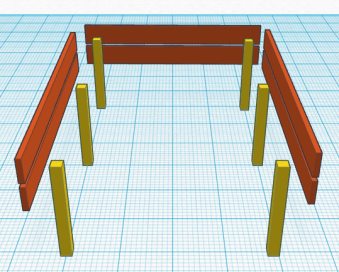
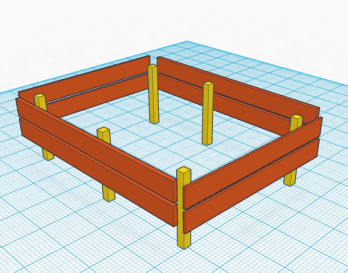
  4. Next, you will attach the side panels of your garden bed to the legs.The first thing you want to do is lay out two 2x6x8 pieces horizontally and parallel to each other so that there are no gaps between them. At equal intervals, starting precisely from the corner, attach the garden bed legs (2x2x2) to the sides using your drill. You will need 6 screws to do this: 1 in each of the two panels for each of the three legs.
  5. Repeat step 4 using two more 2x6x8s and the remaining 3 legs.
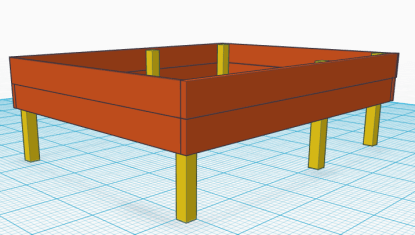
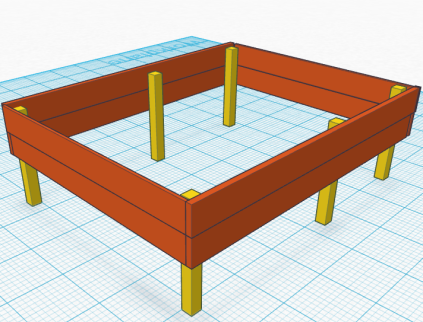
  6. Now you can complete the garden bed by connecting the remaining panels perpendicular to the side panels with the legs to form your square or rectangle. Make sure that the legs are on the inside of the garden bed. Once you have put together all the boards, your garden bed should look like the final image in the 3D model below.
  7. Use the post hole digger and dig 6 holes for your legs, making sure you measure the distances accurately between the legs so you won’t have to struggle putting them into the ground.
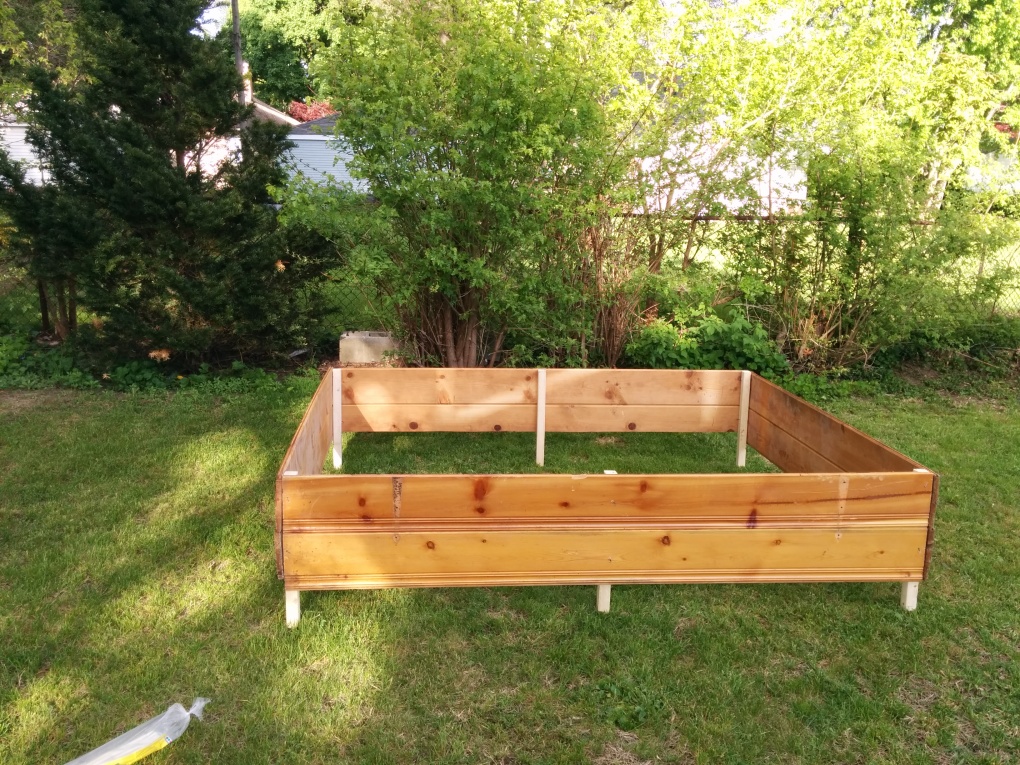
  8. Now you can go ahead and place the garden bed legs into their corresponding holes.
  9. This is an optional step but one we found helped drastically reduce the weeds. Lay the weed blocker down at the bottom of the garden bed and use a staple gun to fasten it to the sides of the bed. Do the same thing across all sides of the garden bed making sure to cover the entire surface area.
  10. Fill your garden bed with the soil mixture of your choice and you are all set to plant whatever your heart desires 🙂

And for the visual learner…

garden bed 1
garden bed 2
garden bed 3
garden bed 4
garden bed 5
garden bed 6

Snapchat-20140523061353IMG_20140523_184812IMG_20140523_190343Snapchat-20140523012215garden bed copy copy

Now sit back and enjoy the harvest to come.

If you liked this post please follow us and share!

Instagram


Don’t Fear the Tile

IMG_20140427_130054
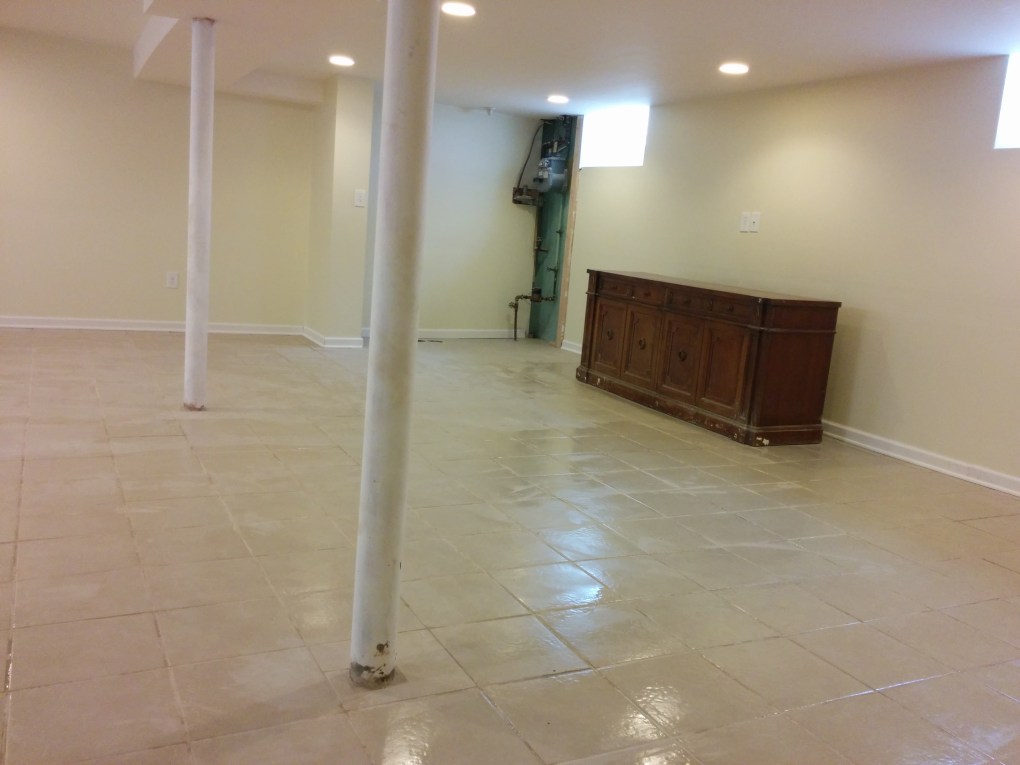
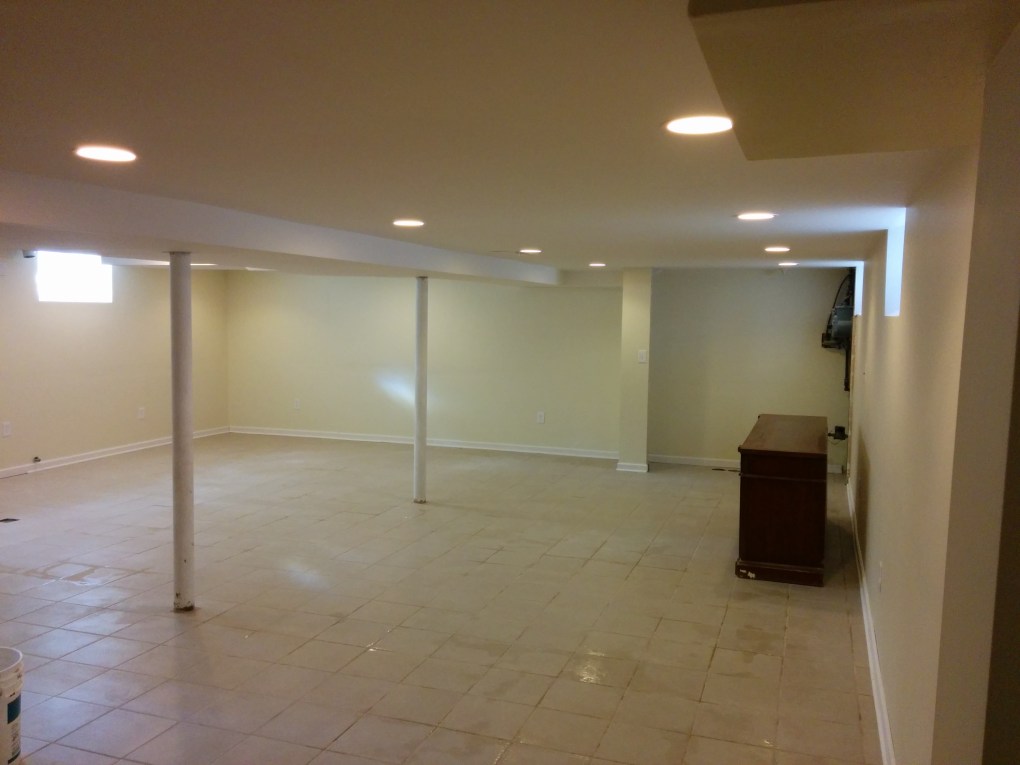
I know we have been MIA but for good reason. We recently started remodeling our kitchen and we are doing pretty much everything ourselves from demolition to tiling to cabinet installation (which means some fun new posts coming soon). This means writing has been on hold for the most part as we juggle chasing after our kinetic 10-month old in between piles of schoolwork and construction. This is a post we have been wanting to do for a while but we just weren’t sure how we felt about encouraging you to tile on your own. Maybe our first tiling success was a fluke, we thought. Considering how many people furrowed their brows over the thought of us tiling, you can’t blame us for being cautious. But having tiled our entire basement in 2014 and now our kitchen in 2016, we are confident enough to encourage you to skip the contractor and try tiling for yourself. So if you’re getting ready to start a major renovation and are thinking about picking up your phone to dial a contractor, stop for a moment and listen to what we have to say. It’s normal to be skeptical about your handy skills and worry that an attempted DIY would end badly for you. You know? That worst case scenario that pops in your head telling you your work will be so bad you’ll have to pay twice as much because you will need to hire someone to fix it up. While that might be true for some things, it is not the case for tiling. Yeah, yeah, we know what you’re thinking. We had plenty of people tell us we were crazy for wanting to tile the basement ourselves. “It will be so uneven,” they said. Not so. We are nowhere near professionals and prior to renovating our basement we had not installed a single tile in our lives. Not only were we able to tile a 1,000 square feet on our own but we did a dang fine job too. With the both of us (plus my father-in-law and brother-in-law helping on occasion) putting in a couple hours of labor after work hours, we were able to complete the project in 5 days. With our kitchen remodel, I was able to tile and grout a 10×11 kitchen in just 2 days working after work hours. Still not convinced? Keep reading to see just how easy it is. And if budget is important, get ready for some major savings!

Supplies
Tiles
Mortar
Grout
Tile Spacers

Tools
Power Drill
Mixing Paddle
Big Trowel
Small Trowel
Rubber Grout Float
Level
Cleaning Sponges
Grout Sealer
Empty Buckets
Clean towels or rags

Below is a more detailed explanation and cost-breakdown of the supplies we picked out:

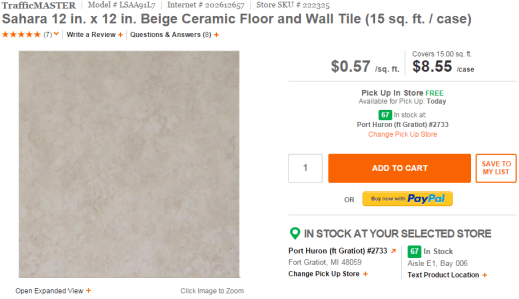
Because we were tiling our basement, we wanted tiles that were both durable and inexpensive. After a bit of research, we settled on TrafficMaster from Home Depot for $0.57 a square foot.  For the 1,000 square feet area we tiled, we ended up buying 68 cases of tile, which put us at $582. Always buy an extra case of tiles to have as backup in case some break or you need to replace some in the future.

tiles

For the mortar, we settled on VersaBond Gray 50 lb. Fortified Thin-Set Mortar which cost us $14.47 a bag. Since each bag covers 100 square feet, we purchased 11 bags (to be on the safe side) for a total cost of $160. Below are the pictures from Home Depot’s website for this product.

The trickiest part about selecting grout (that stuff that goes between the tiles) is making sure that the color matches with the tile. After some back and forth, I settled on the Polyblend #380 Haystack 25 lb. Sanded Grout from Home Depot. Each bag ($14.49) covers around 680 square feet so I bought 2 of them for a total of $29.

Last but not least, I went with the 3/16 inch Job-Tough Tombstone Style Tile Spaces (500- Pack) from Home Depot for the cute little tile spacers. They go for $6 a pack and can be enough unless you plan on finishing the tiles in 1 day, then we recommend you buy 2 packs for a total of $12.

Labor: By putting in the elbow grease yourself, you can save anywhere from $2-3 a square foot. Just to give you an idea-for a 1,000 square foot space that amounts to $2000-$3000 in savings. For a smaller space like a kitchen, the savings can be anywhere from $200-$300. Hey, every penny counts when you’re dropping 10K on a kitchen right?

Note: If you need to cut any tiles you will need a small manual or electric tile cutter (ex. QEP Rip Ceramic Tile Cutter @ $30).

Directions

Read More


DIY Hanging Vase

This DIY project is the culmination of 3 very random happenings:

1) One of our New Year’s resolutions for 2016 was to find ways to incorporate more plants in our home. We love the sense of peace and purpose our plants bring to our home and we simply wanted to diversify our jungalow.

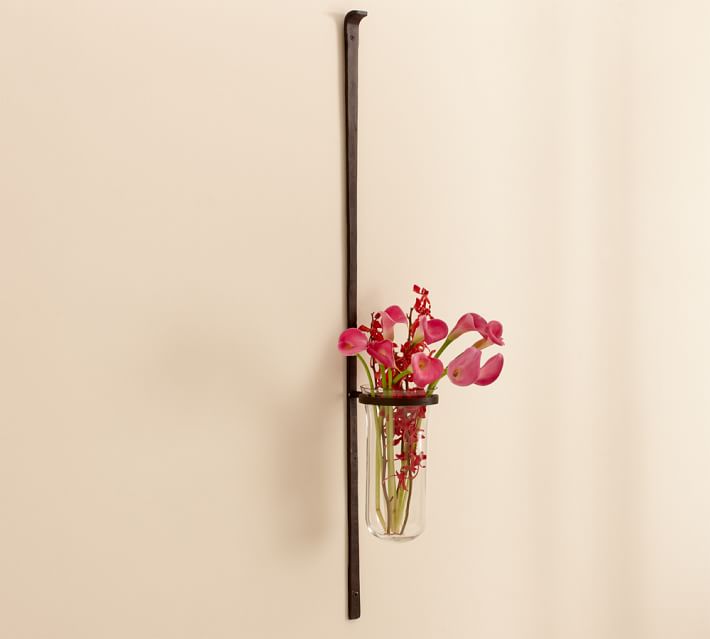
2) I came across these hanging vases while browsing the Pottery Barn website and really liked the concept (just not the price).

artisanal-wall-mount-vase-o

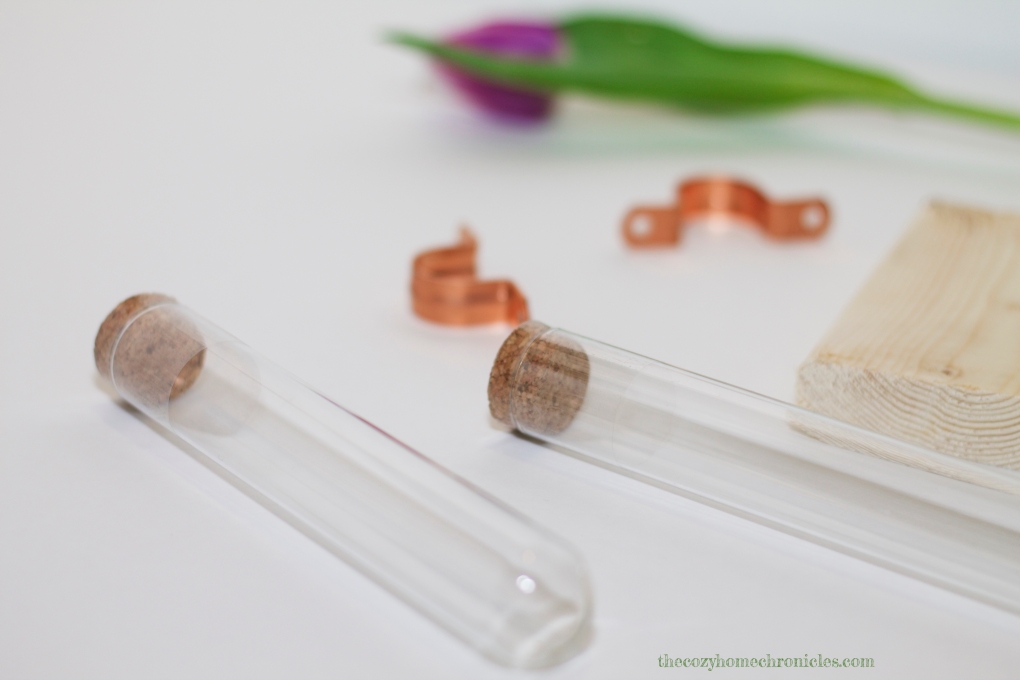
3) We can never resist the dollar section at Michaels and *somehow* ended up with 4 adorable glass test tubes for $1.50 a piece. If you have tubes around in your home (think spice tubes) that you aren’t using, this could be the perfect way to upcycle them 🙂

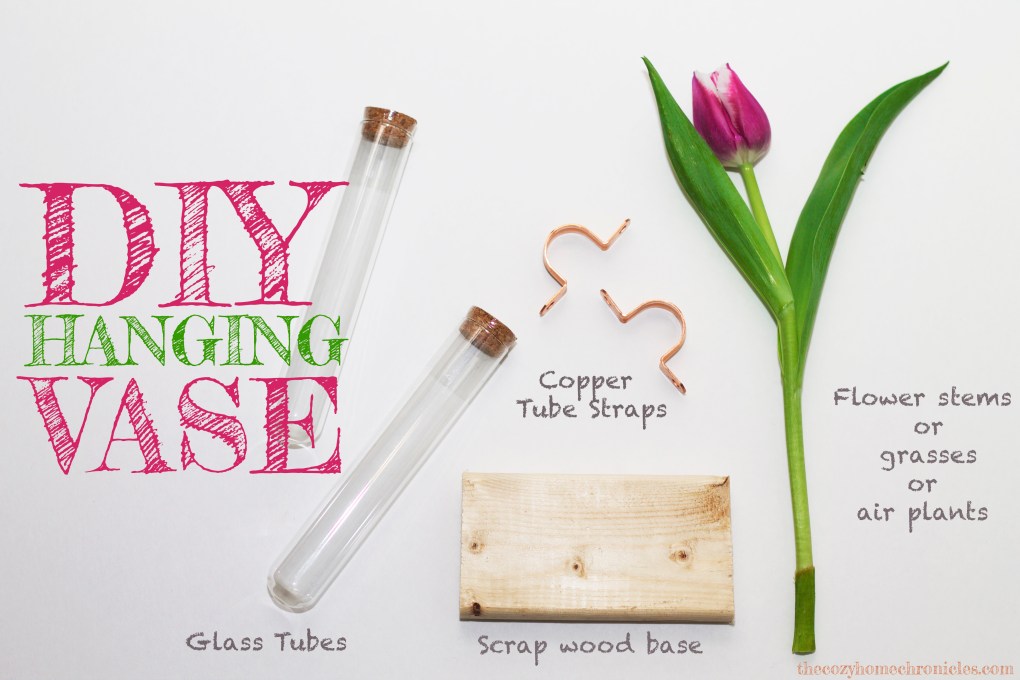
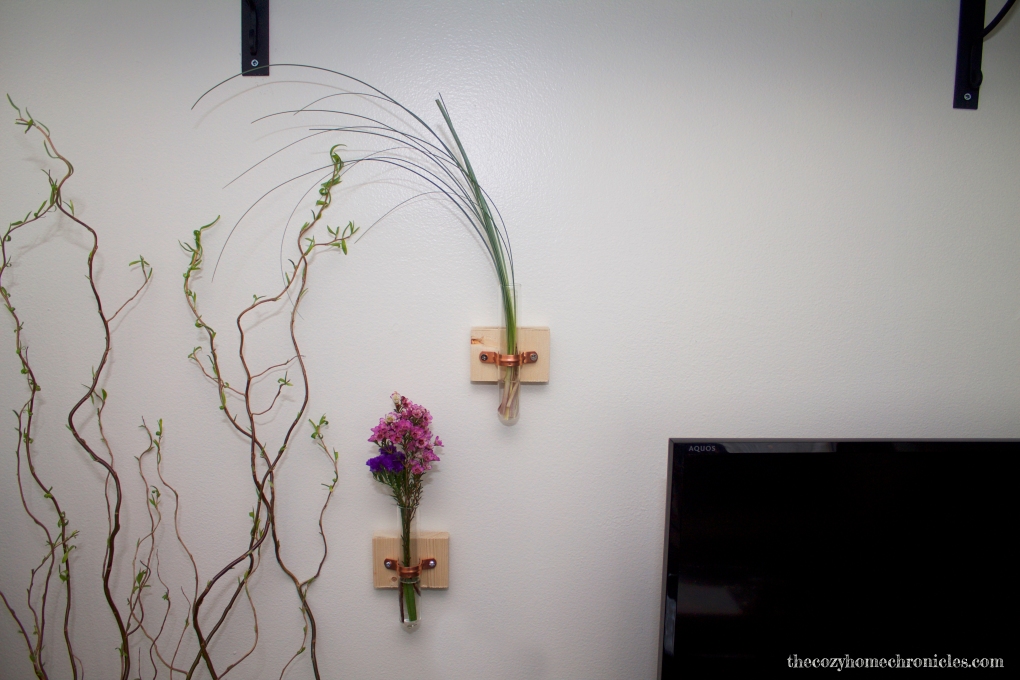
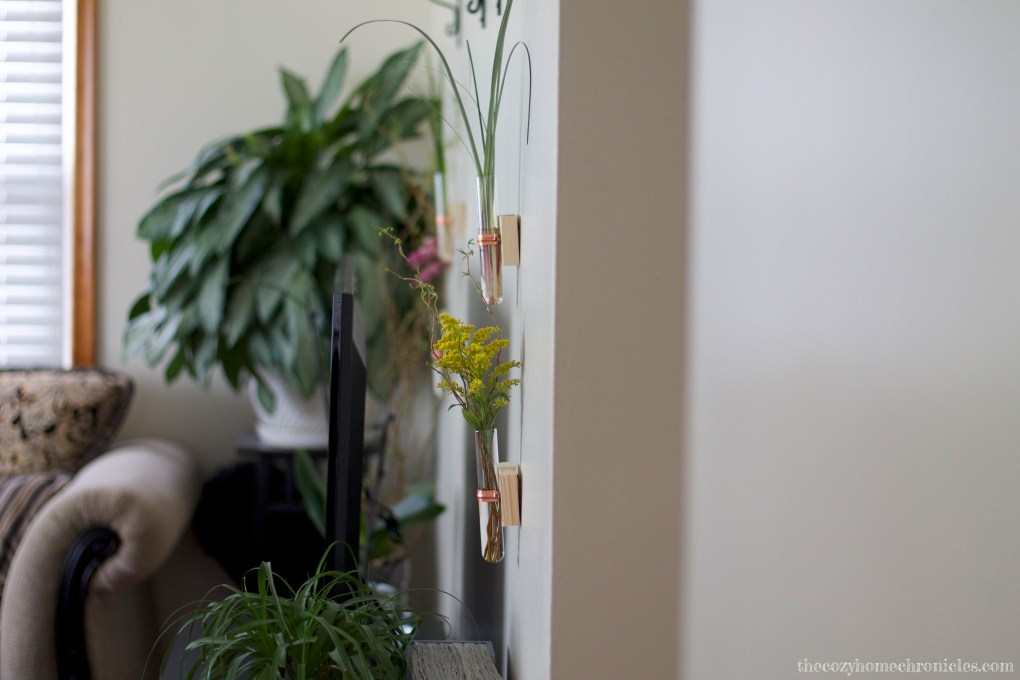
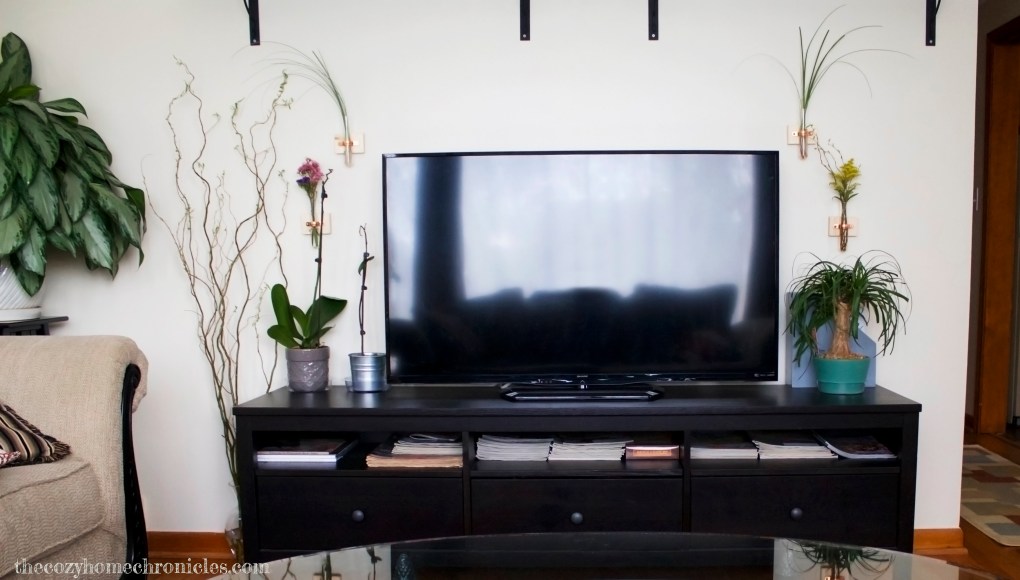
A few visits to the garage later and we had the perfect design for a hanging vase we had pictured in our mind. The finished product involves 4 hanging glass tubes that, while certainly smaller than the Pottery Barn Wall-Mount Vase, are far more economical ($15 compared to $69) and just as dazzling visually. If you’re looking for a budget-friendly way to incorporate more foliage without cramping your space with pots, this is the perfect solution for you!

IMG_0680

Supplies
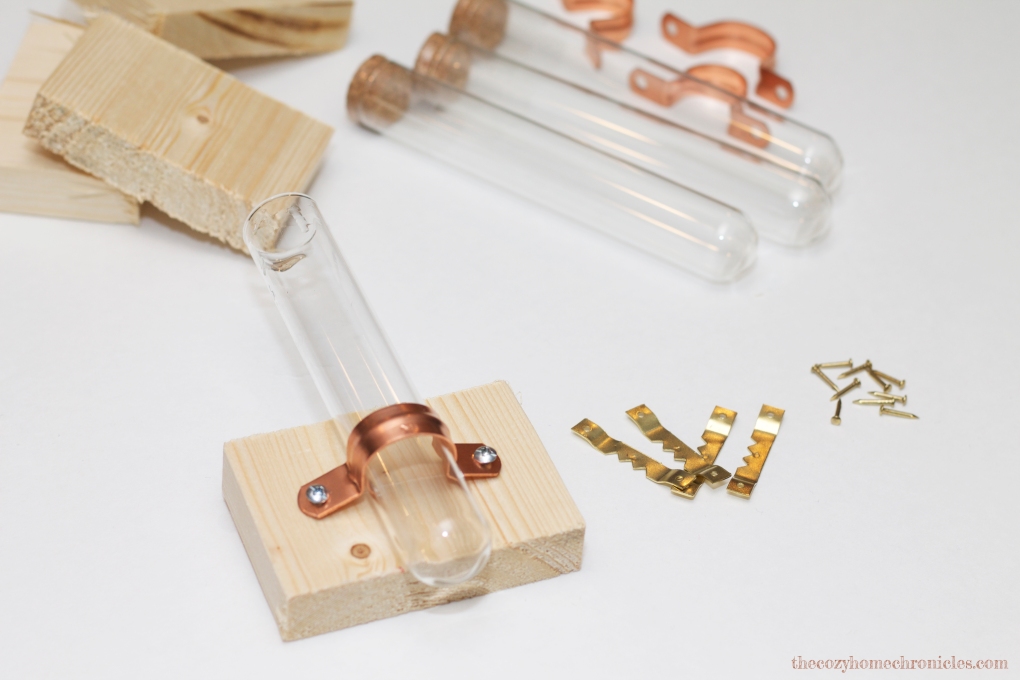
Glass Tubes
Scrap Wood
Copper Tube Straps
Screws
Hanging Kit or Command Hanging Solution

Tools
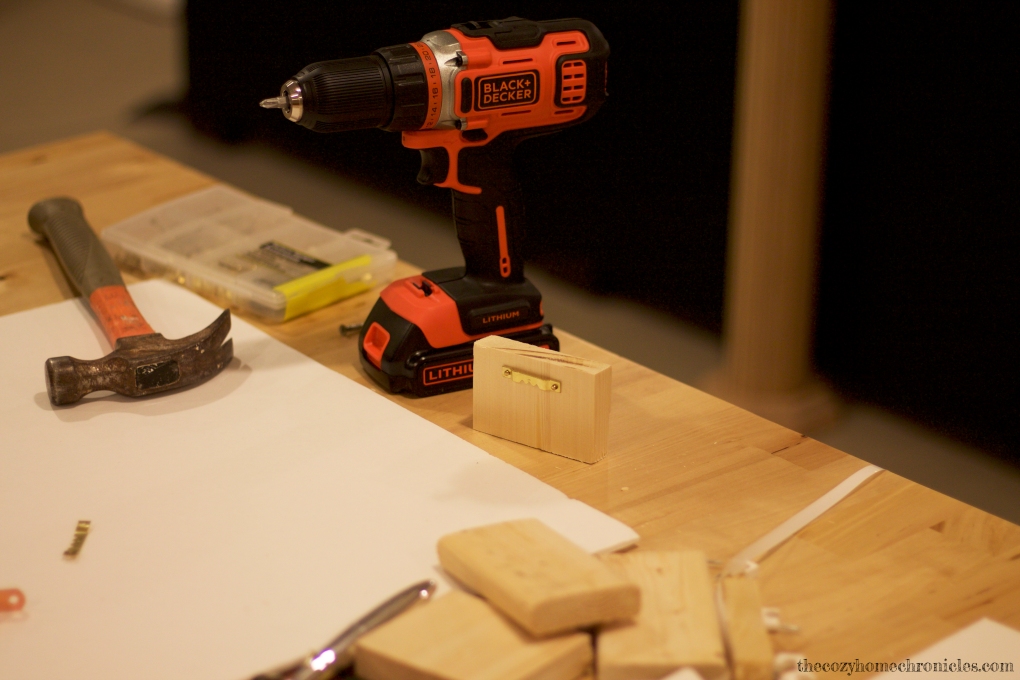
Drill
Hammer

Note: We did not list the dimensions of the tubes or the tube straps because that will depend entirely on what you find and decide to use. If you have your tubes just take them to Home Depot and you will be able to find the straps that fit them very easily. Also, you are not limited to scrap wood for the base; we just wanted to use what we have. If you’re looking for something less rustic, Michaels has a lot of nice wood pieces that could work. All in all, if you play your cards right, this DIY is very inexpensive and so easy to put together.

Directions
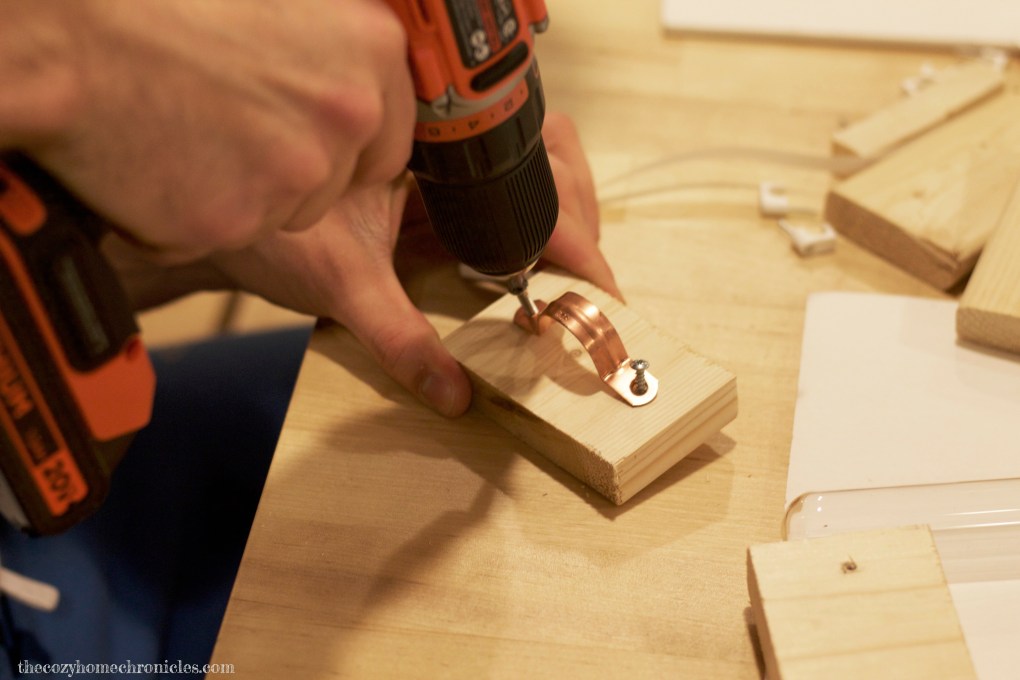
1.  Once you have all your pieces, all you will need to do is drill two holes (corresponding to the the holes in the tube straps) into your base. Make sure that your base is thick enough to withstand the length of the screws.
2. If you are choosing to hang these on your wall the old fashion way, go ahead and nail your hanger to the back of the base.
3. Once complete, drill the tube straps halfway into the base so that the straps are loose enough to adjust.
4. Slip your tube through the tube strap until it is positioned the way you like (we aligned our tubes so that the tube strap was the halfway mark). Once you are happy with the positioning of the tube, tighten the screws until the tube is secure (do this gently so as to not crack the tube).
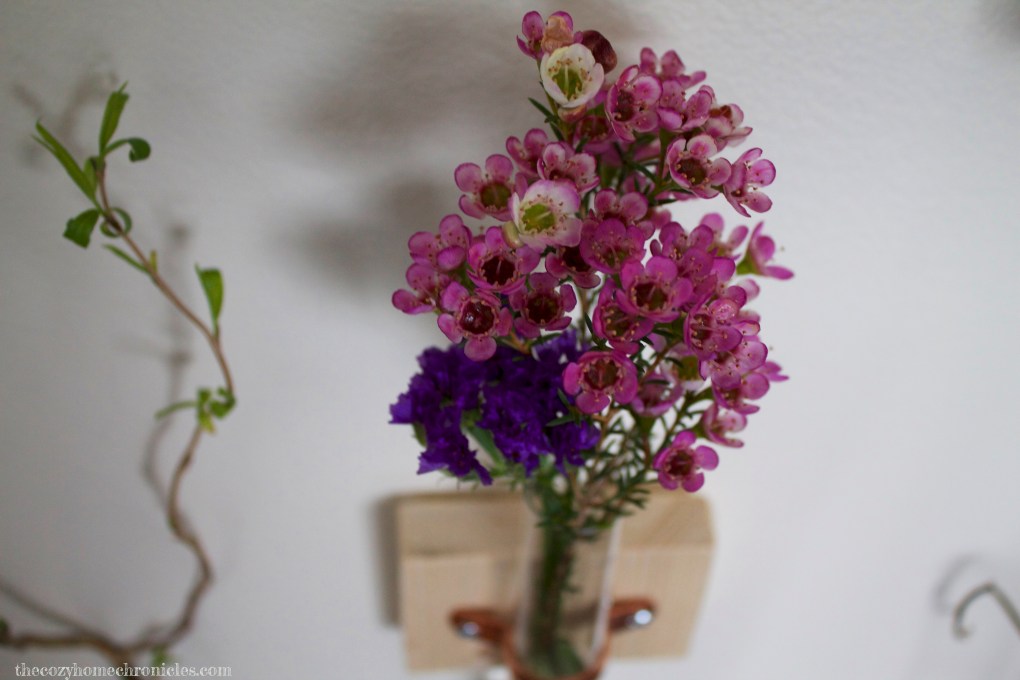
5. Mount your completed vase to the wall and decorate with real or artificial flowers, grasses, or air plants.

Now kick back and enjoy the little pieces of nature bringing your space to life 🙂

IMG_0674

IMG_0955

IMG_0964

IMG_0714

IMG_1053

IMG_1044

IMG_1035

IMG_1063

If you liked this post please follow us and share! You can also find us on Instagram, Pinterest, and Twitter.

Instagram


DIY Wooden Backsplash

IMG_9720

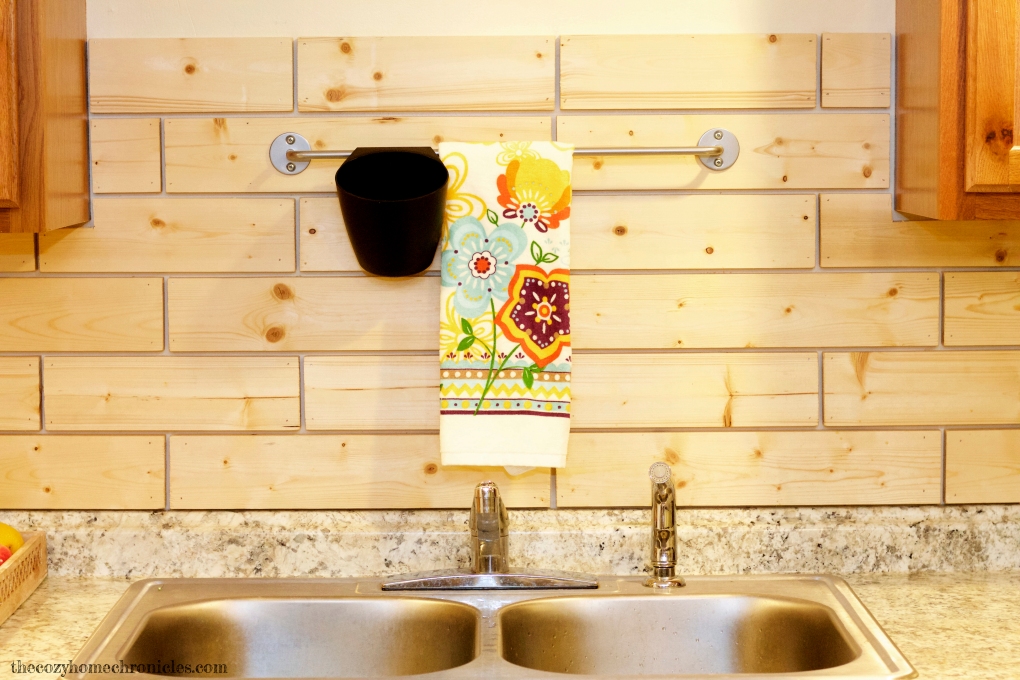
Ikea trips are our favorite because they fill us with inspiration (and cinnamon rolls) and my husband gets to reminisce about his childhood. This past spring we were strolling through the lower level, when we came across a display for dinnerware that we really liked. I can’t find the picture I snapped of it but it was of a kitchen island styled with pretty dishes, hand towels, etc. sitting in front of a wall tiled with gray wood panels.  At the time we were working on our basement kitchenette and still didn’t know what to do for a backsplash. We loved the way the wood panels looked and decided to recreate the look in our home. If you’re curious about how to create this look either as a backsplash or accent wall then follow along to find out just how easy and budget-friendly this project is. Thank you Ikea!

Supplies
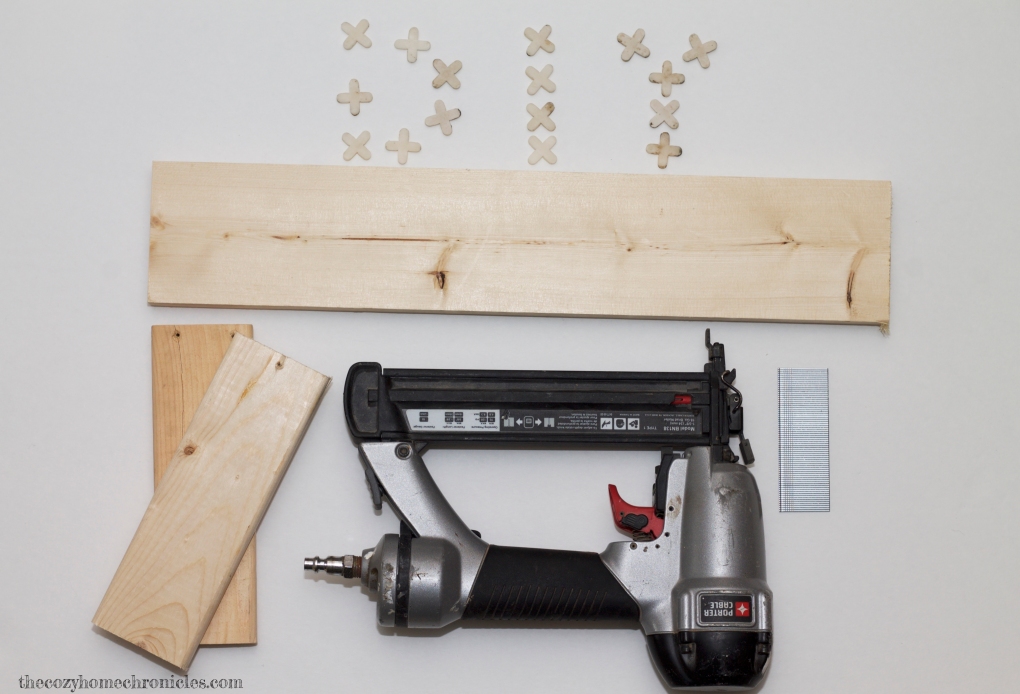
1in x 4in x 8ft Furring Strip Boards (They also come in 3″ and 6″ as well)
Thompson’s Aerosol Waterproofing Wood Protector 11 0z.
1/8 in. Tile Spacers 

Tools
Nail gun and nails
Miter Saw
Pencil

IMG_0708

Directions

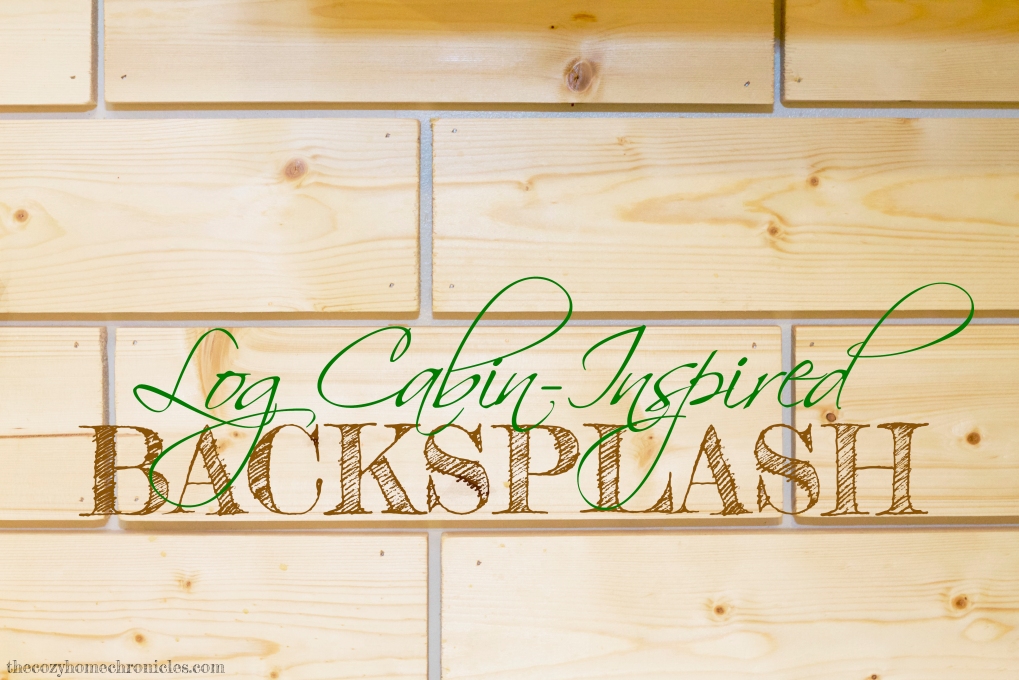
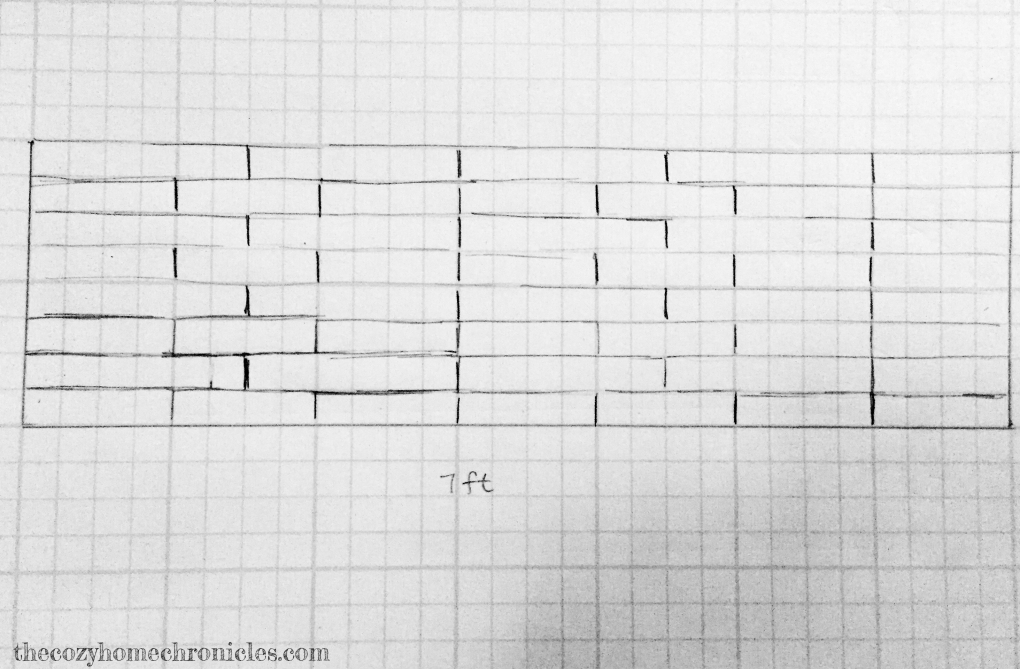
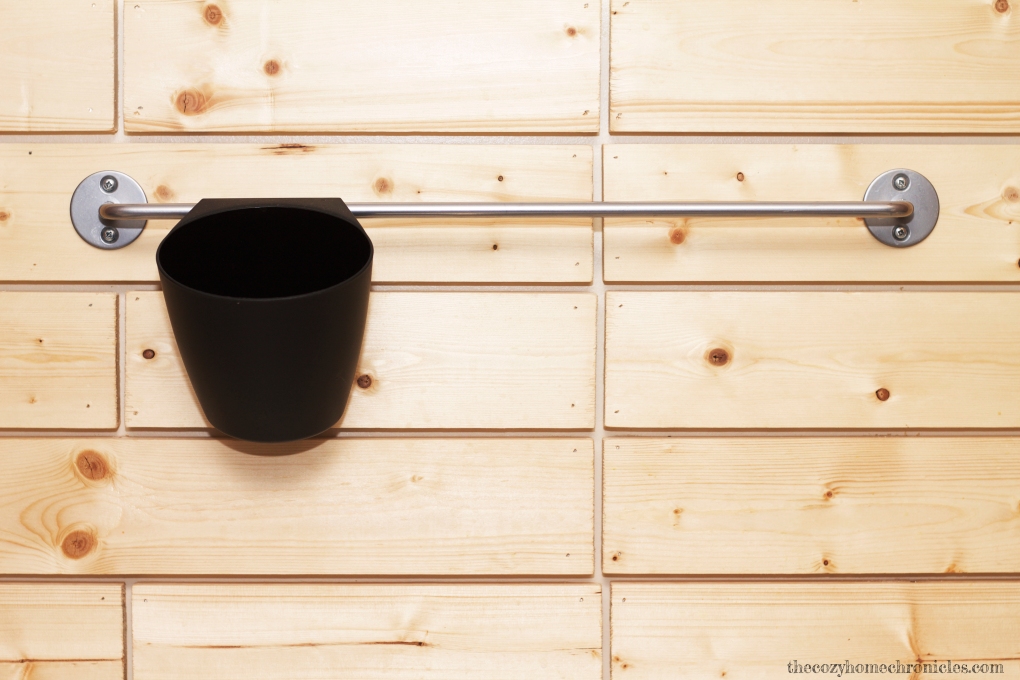
First you will want to measure the space and draw out your design to know how much wood you will need, as well as how you will make the cuts. The area we were covering was approximately 7ft long by 2ft. For that size space, we used 6 1in x 4in x 8ft Furring Strip Boards and alternated in each row between 1ft long pieces and 1.5ft long pieces.You can cut them smaller if you want a bricked look or go for even longer panels; it’s really up to you! You can even mix and match various sizes and stains of wood for a cool design.

2016-02-22 15.25.09

Note: Make sure to take into account any cabinets, outlets, or other obstacles as you will have to make some special cuts to fit around them. Think puzzle pieces. We forgot to do this in our design so we had to play it by ear during the installation. Also don’t forget to account for the tile spaces either.

Once you have your design drawn out, go ahead and cut your lumber board into the corresponding sizes. Now it’s time for the installation.

IMG_0689

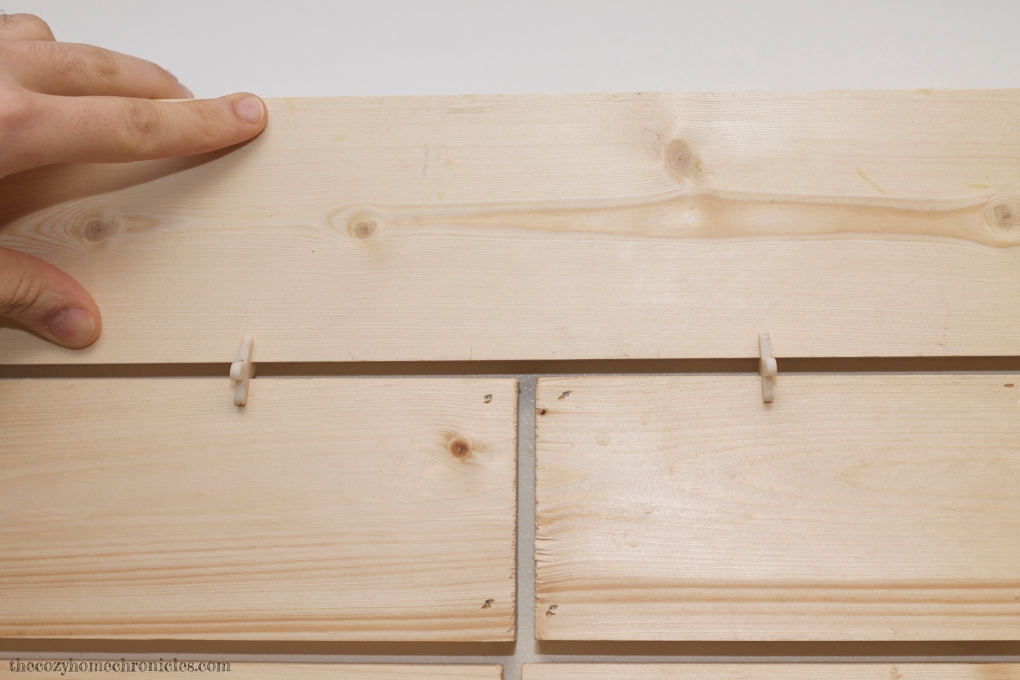
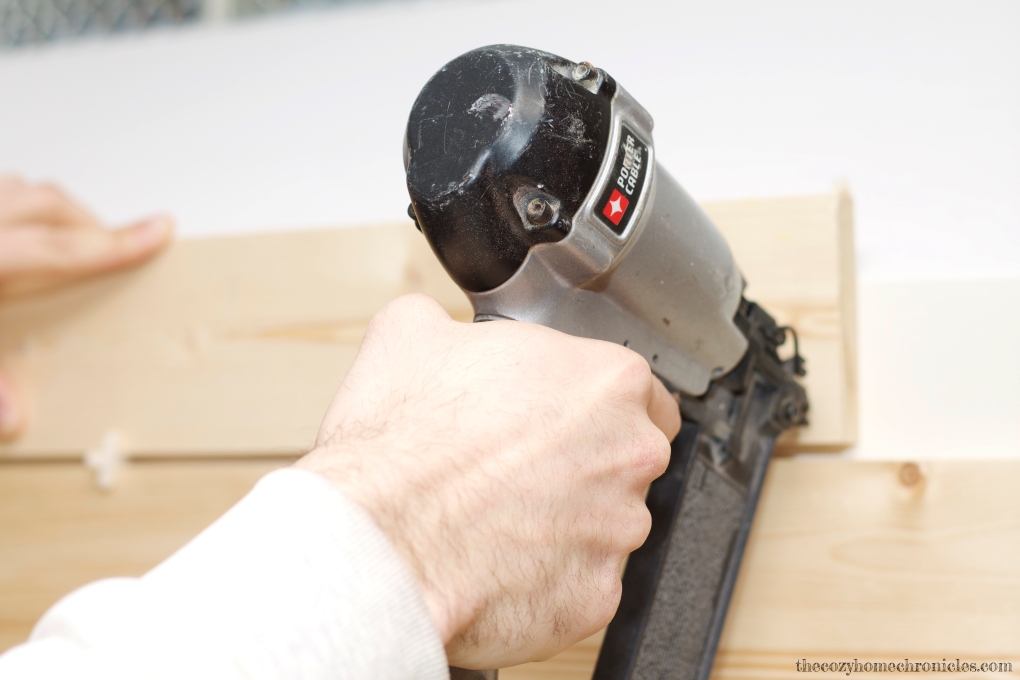
Start from the base and work your way row by row. Hold up your wood tile (or have a partner help you) and nail each of the four corners to the wall. Place a tile spacer before you nail the next wood tile. Continue until you have completed the row then place a spacer above the installed tile and begin the next row.

IMG_0690

If you have your design and pieces cut ahead of time, the installation is a breeze.

Once you are done installing the tiles, apply a generous spray (make sure you wear a mask, windows are open, and there is no food in the open) of sealant to the tiles. You will want to do this especially if you are installing the wood in a kitchen because if the wood is not treated, it can get wet and become smelly and rotten. Waterproofing will really protect and extend the life of the wood. On a side note, you can totally stain or paint the wood if you like. We like the raw wood, log-cabin look so we chose not to stain it but the possibilities are endless if you want to customize this project to a specific look or style. If we did this in our master bedroom or living room, we would have considered staining or painting.

IMG_0696.jpg

IMG_9717

If you have all the tools, the project will not cost you very much. For tiling a space our size with the wood that we used, it didn’t cost us more than $20 (each lumber board was $1.98 and the waterproofer was around $7). On top of that, installation didn’t take more than an hour. It is seriously that easy! Leave us a comment and let us know what you think. Is this something you would do for a backsplash or accent wall?

If you liked this post please follow us and share!

Instagram


5 budget-friendly DIYs that can transform your bathroom

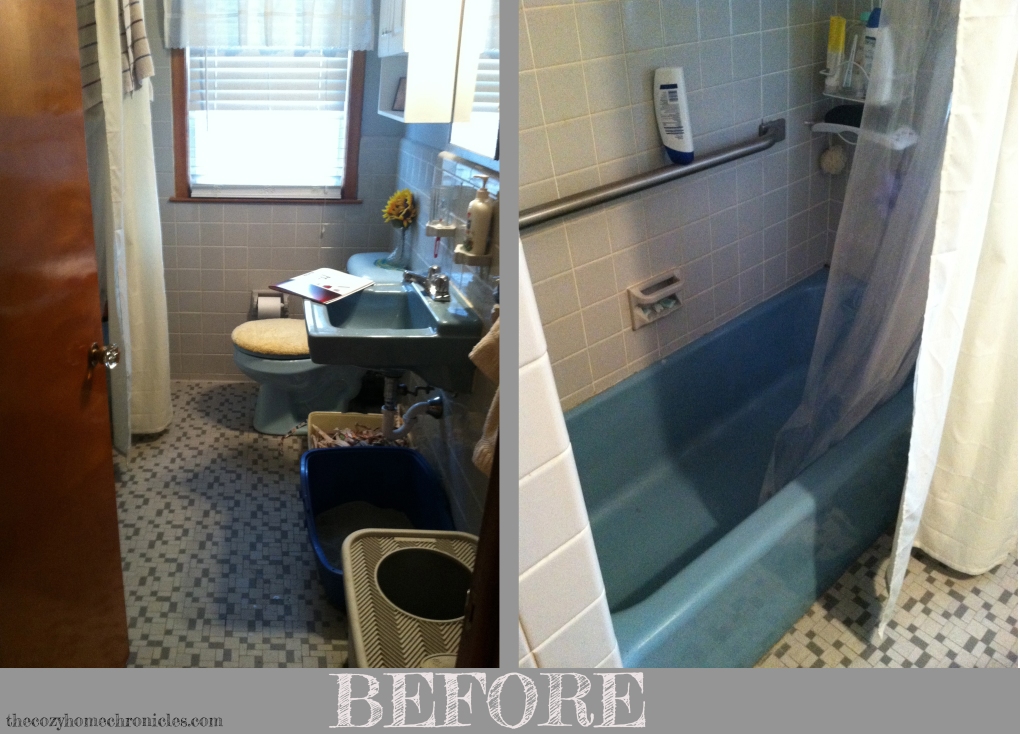
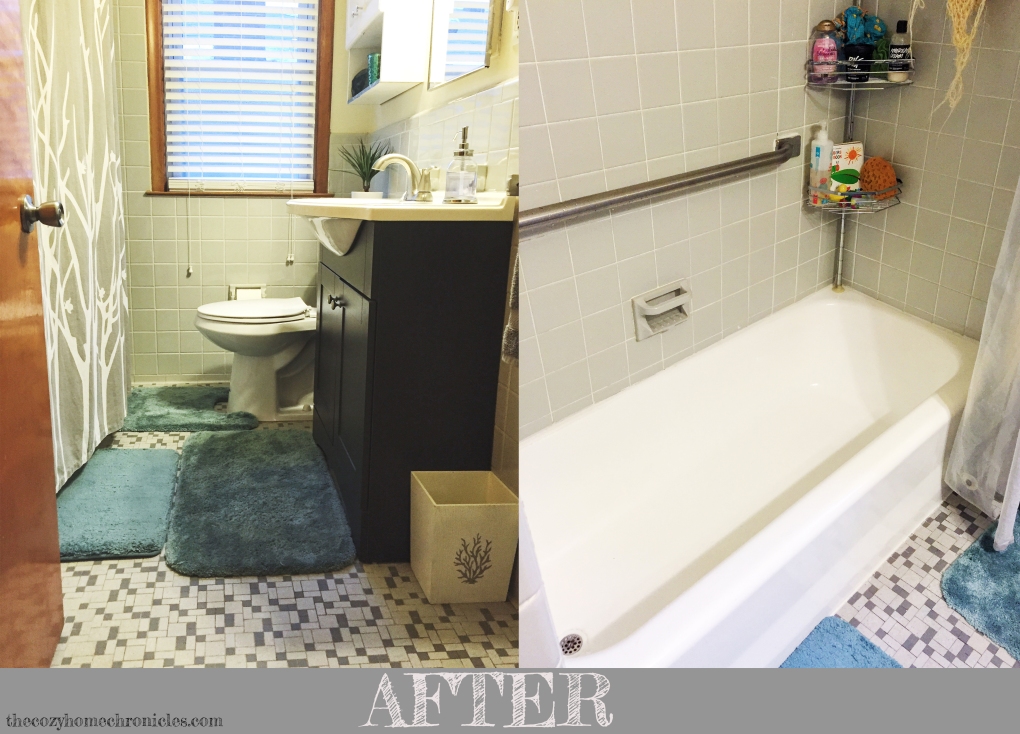
We witnessed many horrible bathrooms during our house hunting phase so we were quite grateful about the state of ours. Still, the blue toilet, sink, bathtub, and walls had us grimacing every time we looked. If we focused on the blue it felt like the whole bathroom needed to be gutted and redone but when we focused, instead, on the neutral gray tiles we knew that a few changes and some fresh decor was all this bathroom needed. Here we present 5 budget-friendly DIYs and some bathroom inspiration based on our experience renovating our main bath. If you are a new homeowner and don’t know where to start, this post is for you. If your bathroom tile is in great condition, some fresh paint on the walls and these simple DIY projects can dramatically transform your bathroom and make it look brand spanking new!

Untitled-2

Untitled-1

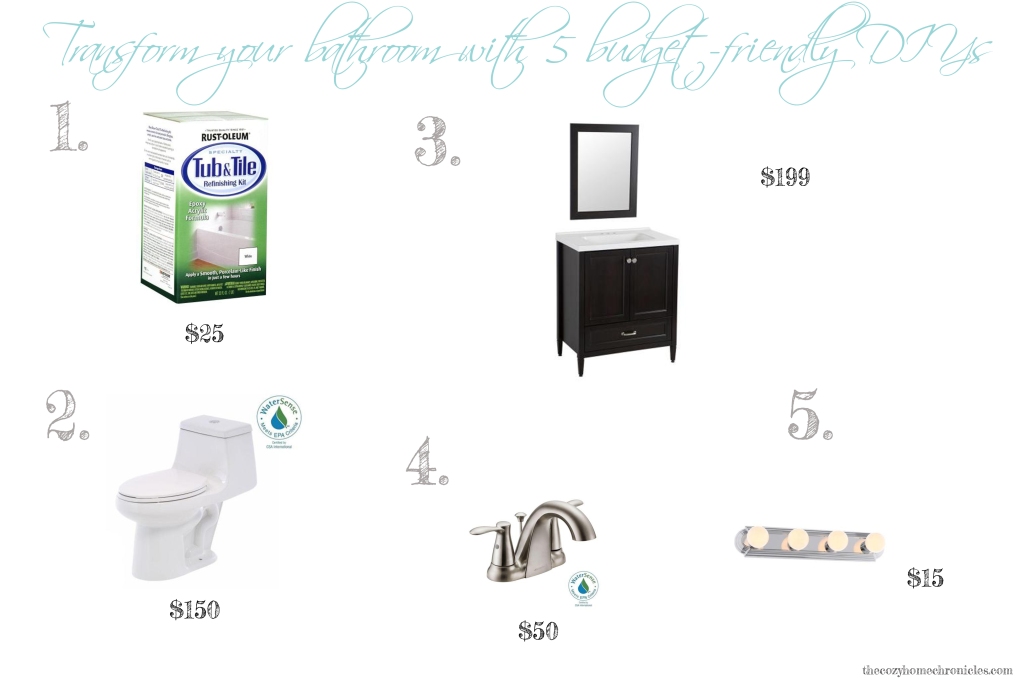
  1. Why pay at least $200 to replace your tub when you can paint it for $25? If there are no major problems with it (mold, cracks, dents, etc.), some fresh white paint can really make a difference, especially when you step into the tub for your first shower as a new homeowner 🙂
  2. Replacing an old, worn-out toilet can not only brighten the appearance of a bathroom but is great for the plumbing and conservation of water if that is important to you (we hope it is).
  3. A new vanity can really set the tone of the space; serving as a nice focal point and adding some much needed storage if your bathroom is on the smaller side. It really doesn’t take much to install one either.
  4. If you are changing your vanity and sink, might as well pick out a new faucet to go with it. Goodbye leaky, mildewy faucet and hello pretty shiny metal!
  5. Not to make a lightbulb joke here but it really doesn’t take a seasoned DIYer to change the lighting. Choosing something that adds bright light to the room and accentuates the overall look can go a long way.

This is certainly not a comprehensive list of all the changes you can make but it does cover the largest and often most expensive features in a bathroom renovation. With any renovation, there will always be cheaper and more expensive options so what we have included here are the best of both worlds: good quality at a reasonable price. Not all of these changes are necessary either, as it will depend on the state of your bathroom and budget. Once you have completed any of these major DIYs, you can begin with the fun part of the renovation…decorating!

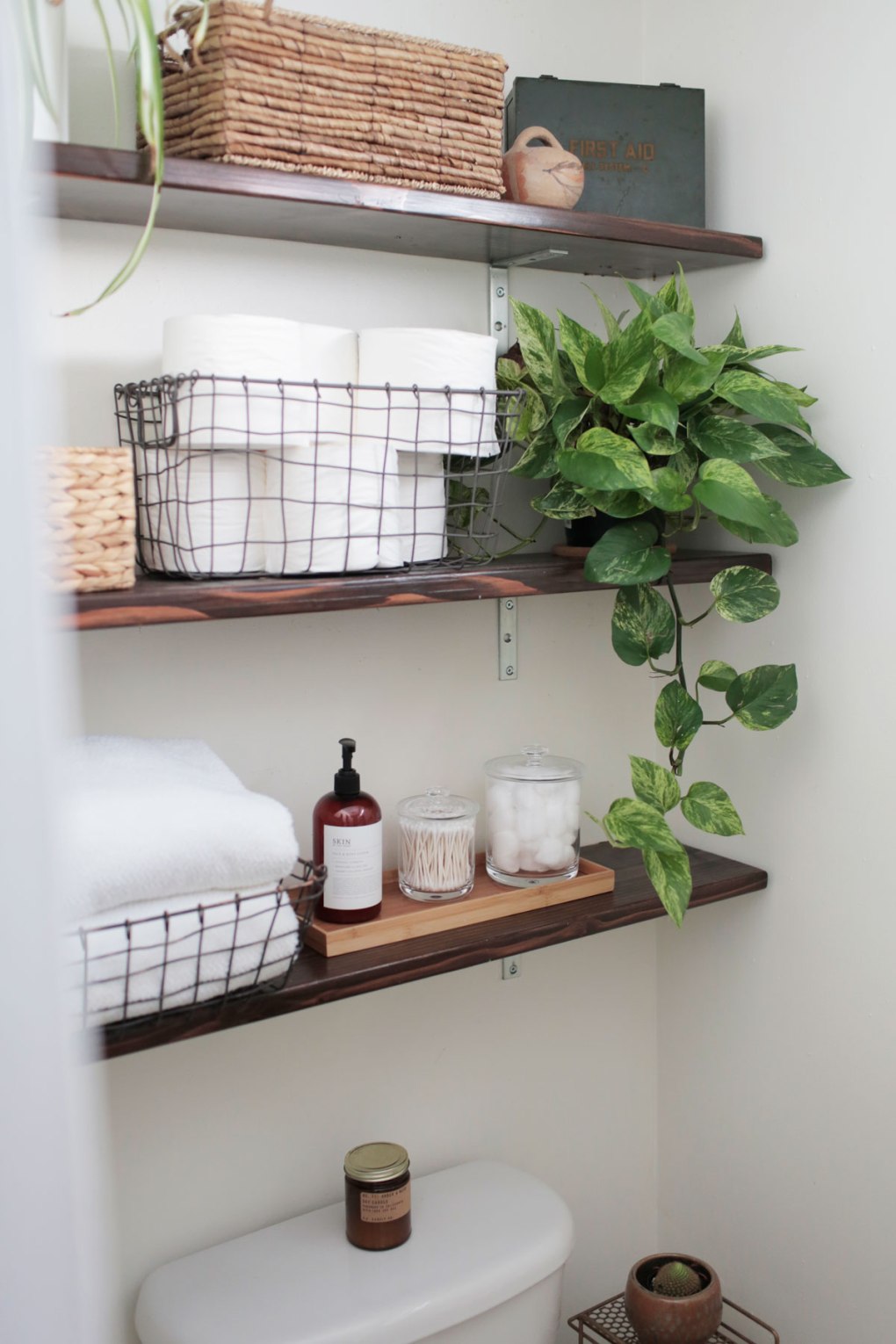
For instance, you could really add a cozy, rustic feel to the space by installing recycled wood for open wall shelves above the toilet.

REISBATHROOM9_R3A1432

Image via Jayadores

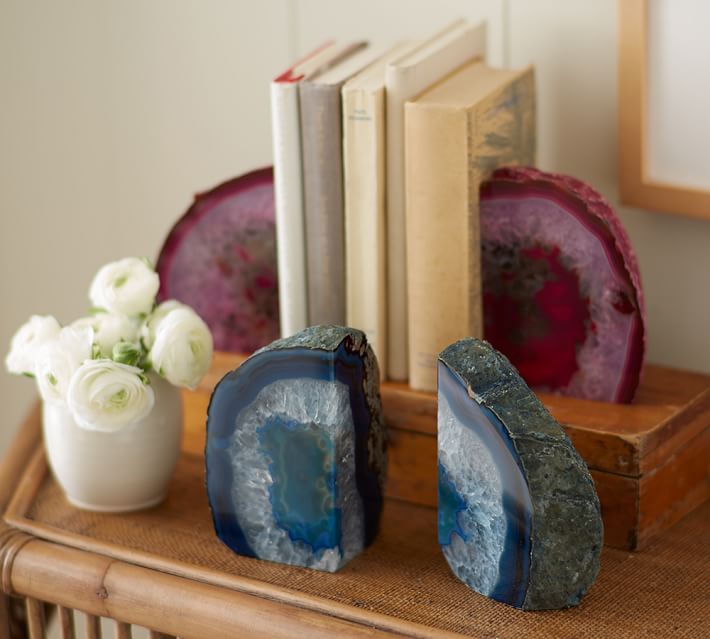
Top with pretty trinkets, baskets, plants, and natural stones to bring the walls to life.

geode-bookends-set-of-2-o

Image via Pottery Barn

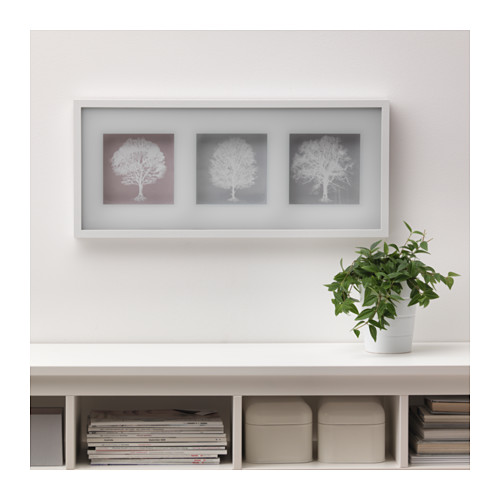
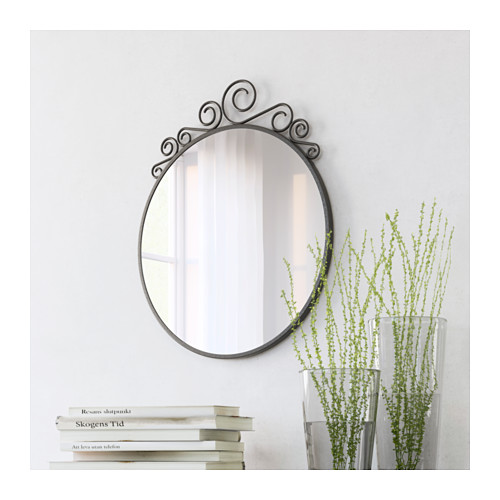
Images via Ikea

Don’t forget some inexpensive Ikea wall art and mirrors to make the room look more expansive.

erikslund-picture__0290565_PE424883_S4ekne-mirror__0380427_PE555348_S4Last but not least, throw down some plush bath rugs and a pretty shower curtain for a splash of color and pattern.

And voila!

BATH AFTER

If you liked this post please follow us and share!

Instagram


Bathroom Cabinet Decoupage Makeover

IMG_0539 copy

There are two ways to deal with an old and worn-down possession, furnishing, etc… One way is to toss it out and buy a replacement. The other involves putting on your creative cap and transforming it into something beautiful and functional. I’ll leave you to guess which is the boring option and which is the super fun and rewarding option. We opted for the latter and although we were hesitant about doing something so bold, we are really happy with the result.

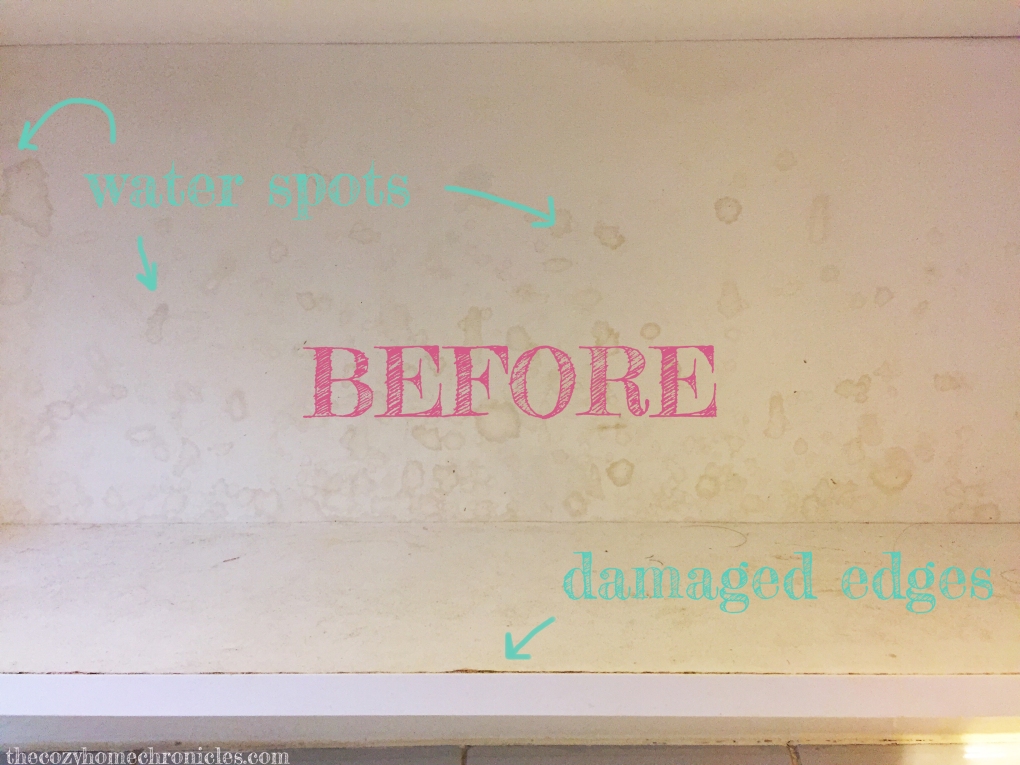
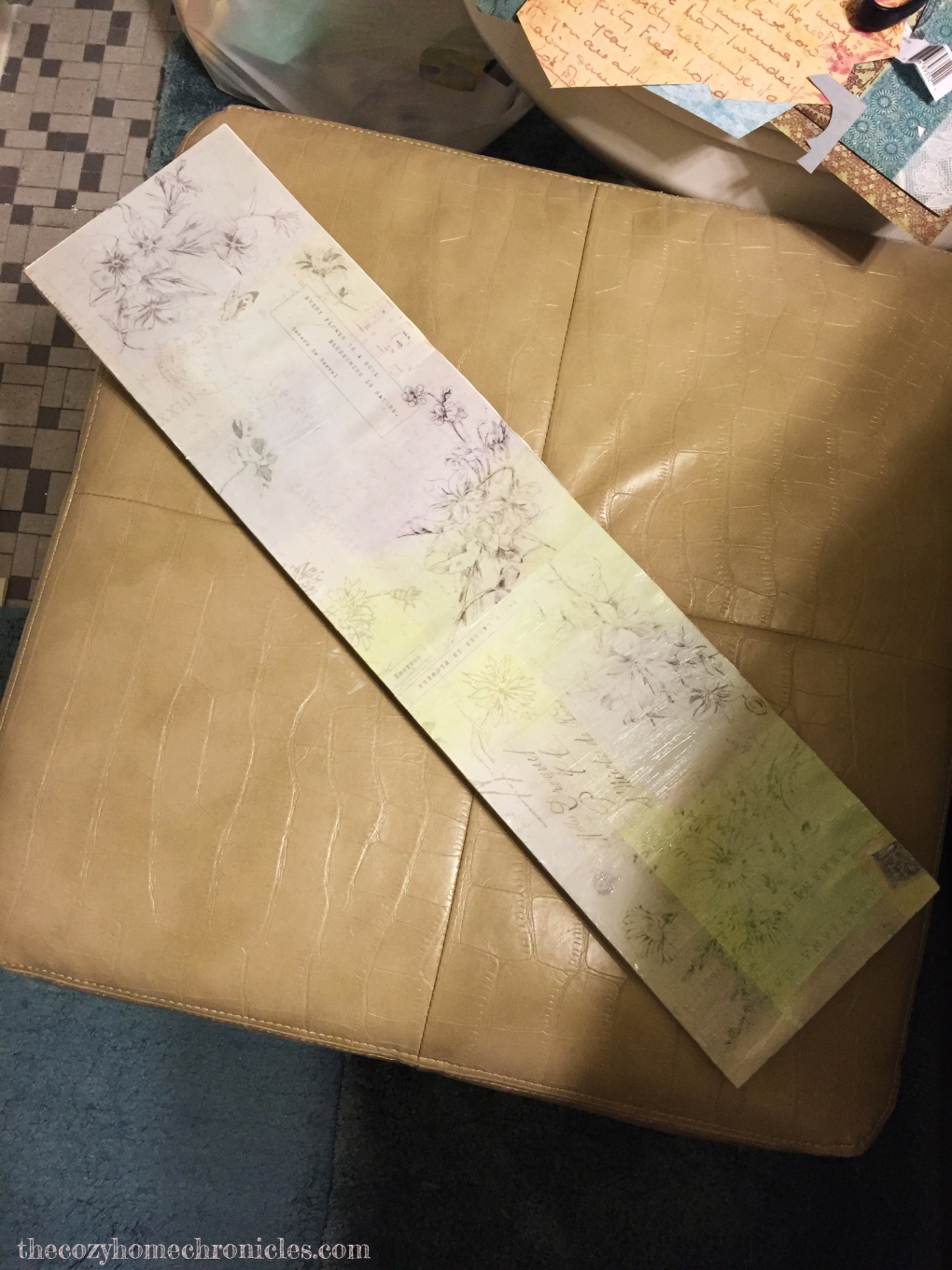
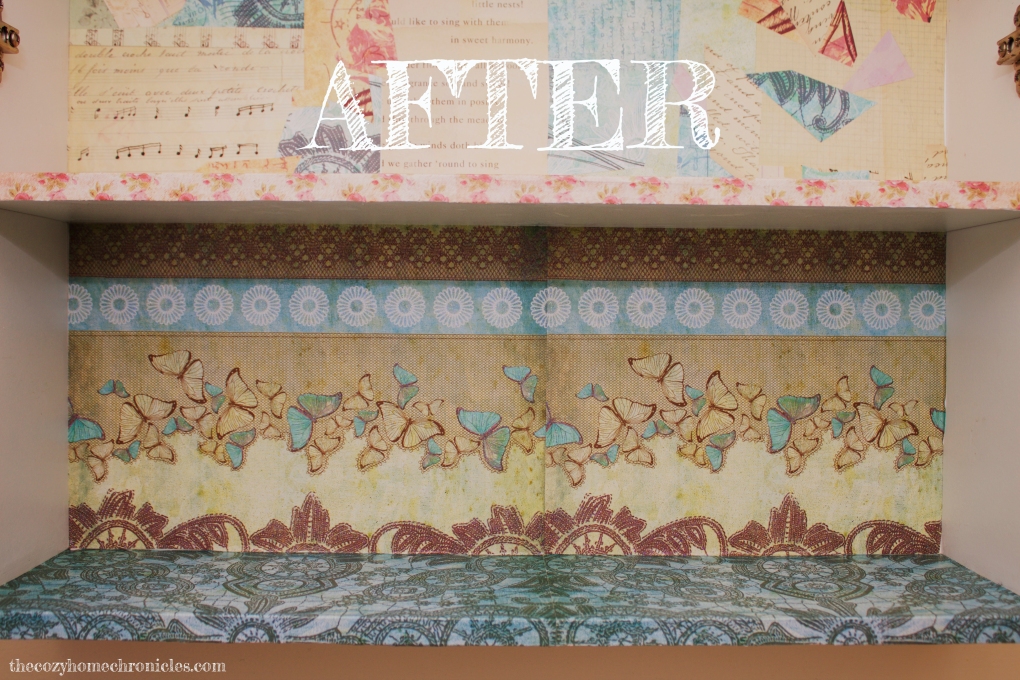
This decoupage makeover was done to an old bathroom cabinet that hangs over our toilet in our main bathroom. It was one of those things we wanted to change when we moved in but we just never got around to because we were working on bigger and badder things (like finishing our basement by hand). I (Sammy) have been trying to organize the closets in the house recently and it hit me when I saw the cabinet empty that I could fix it then and there. I pulled out some paper scraps I had been wanting to use and the rest is history.

IMG_6204 copy.jpg

What you’ll need
Mod Podge
Foam Paint Brush
Pretty paper in the design and color of your choice
Scissors
Exacto knife
Books (to aid with the drying)

This makeover is very simple, inexpensive, and can be modified for any project, big or small. Obviously, the bigger the project the more paper and Mod podge you will need. For a cabinet this size and the type of thicker paper I used, I ended up going through half of an 8oz container of Mod podge.

Time
The design really dictates the amount of time this project will take you. If you’re just applying paper by the sheet it will take significantly less time than a collage. To make the collage a bit less tedious, I made use of larger strips of paper interspersed with smaller shapes and sizes. Overall, it took me about 5 hours to complete including drying time.

Directions

All this really involves is two easy steps: 1) Apply Mod podge and 2) Wait for Mod podge to dry. The application, however, must be done with care as air bubbles can form and ruin the surface.

  1. If you’re working with furniture, take apart any shelves or doors that can be done more easily if separated. Our cabinet had one shelf that could be taken out so I did that first and while it was drying, I finished the rest of the cabinet. It would have been easier to take the cabinet down but I just brought a stepping stool and finished it on the spot.
  2. Clean the surface you are finishing with a lightly dampened cloth and dry well.
  3. Once your surface is dry, dip your brush in Mod podge and apply generously to the back of your paper.
  4. Press the paper onto the surface and apply pressure with the palm of your hands until it sticks and there are no air bubbles.
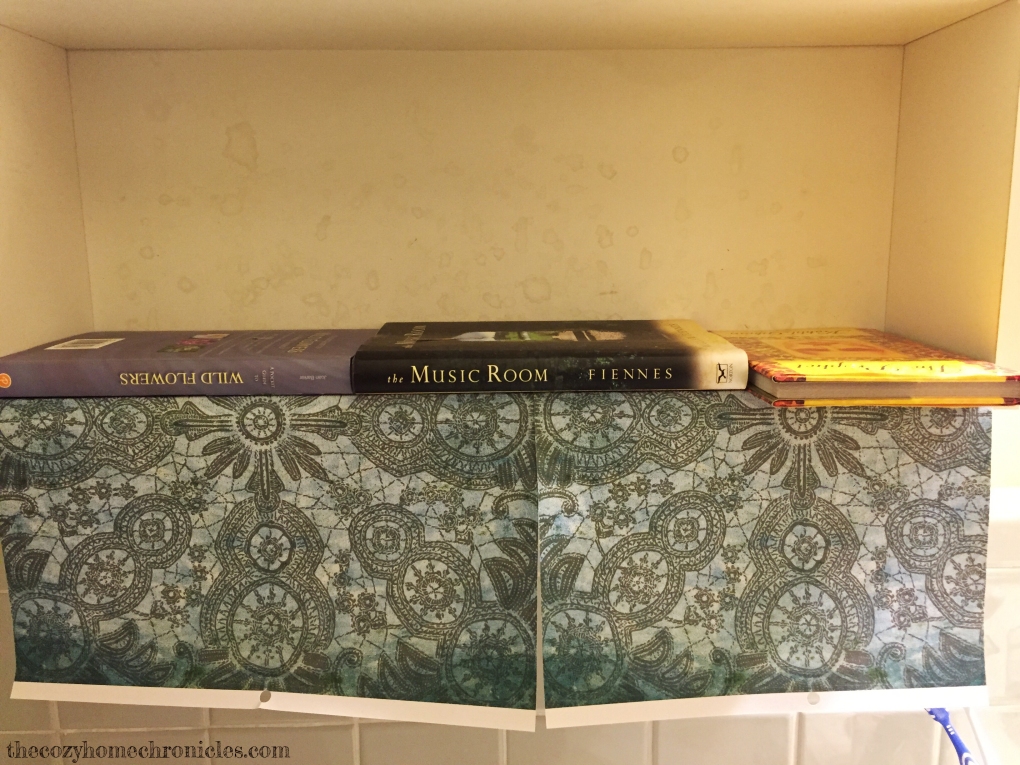
  5. Here you can place a book or something heavy over the surface so that it dries flat.
  6. Once dry (1hr) you’ll want to remove any excess paper with a scissor/Exacto knife.
  7. Finally, apply a generous coat of Mod podge over your work to seal it and let dry for at least 1 hour.


2016-02-02 16.05.11

Taking the cabinet apart.

2016-02-02 16.35.16

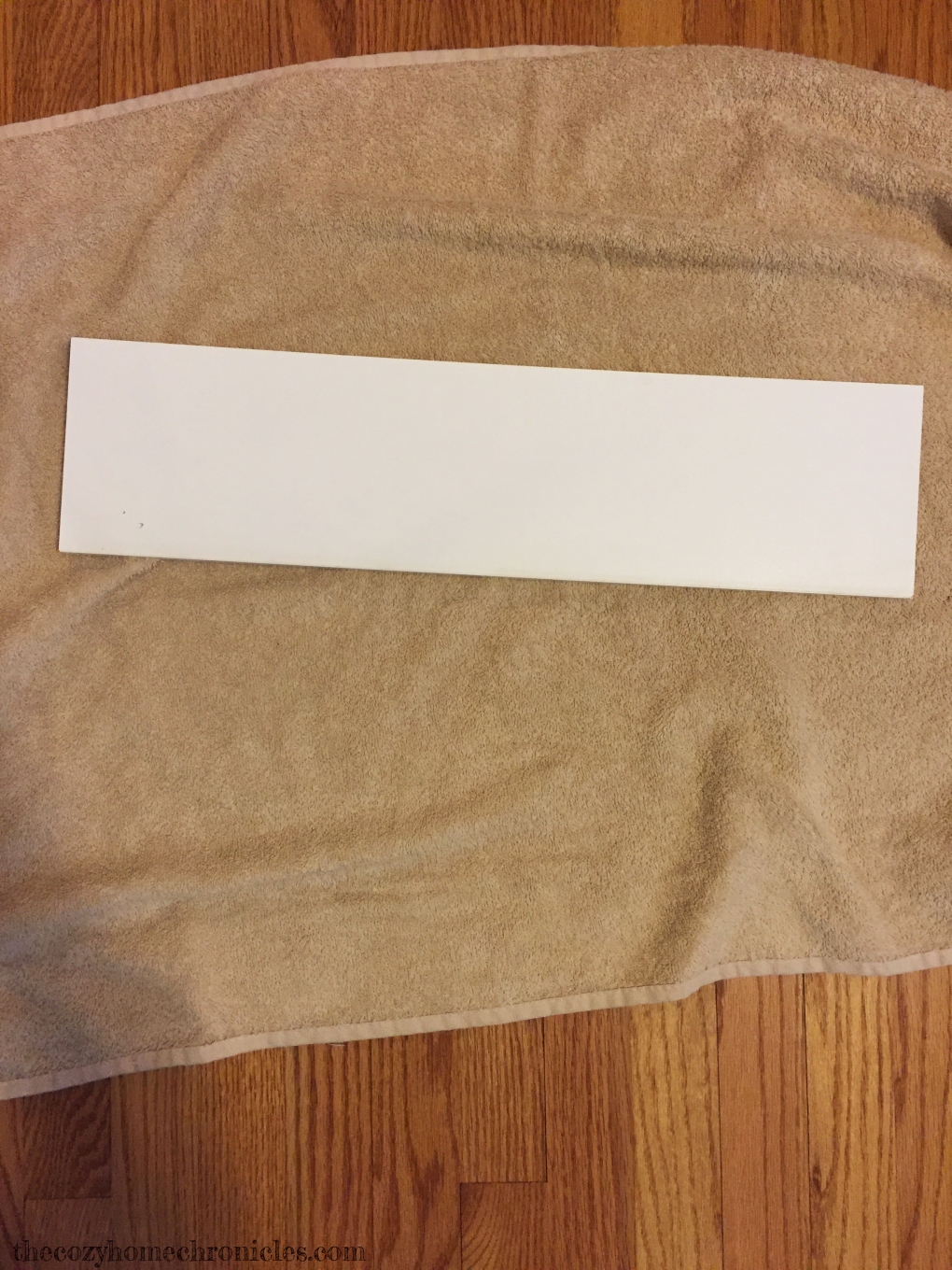
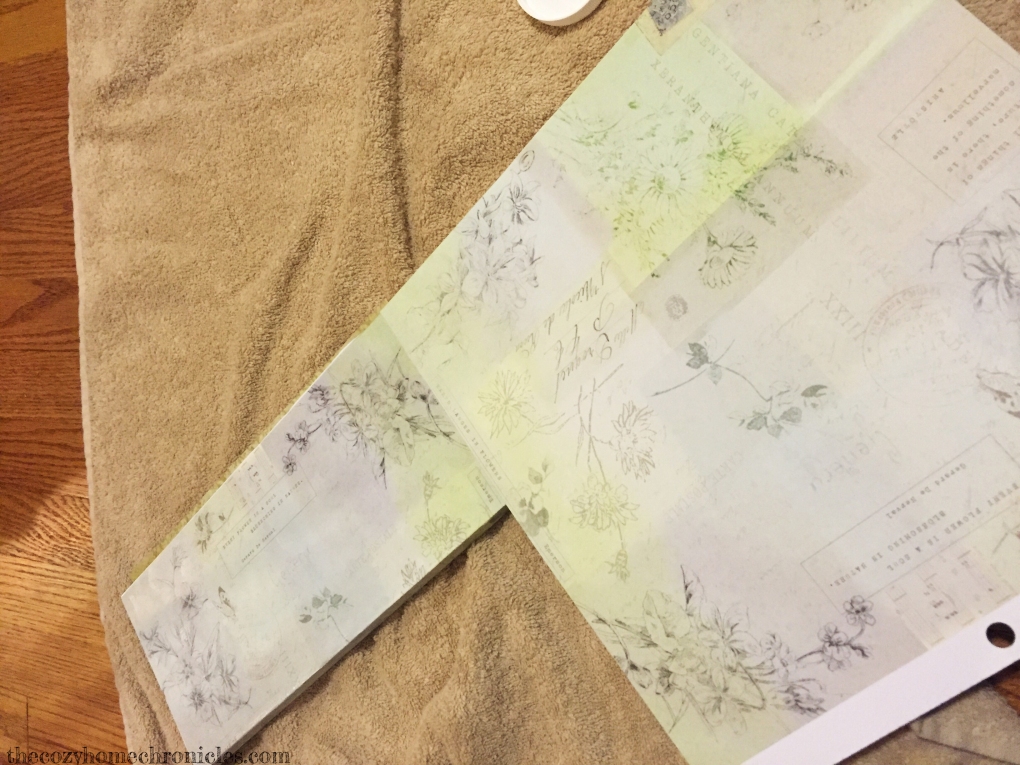
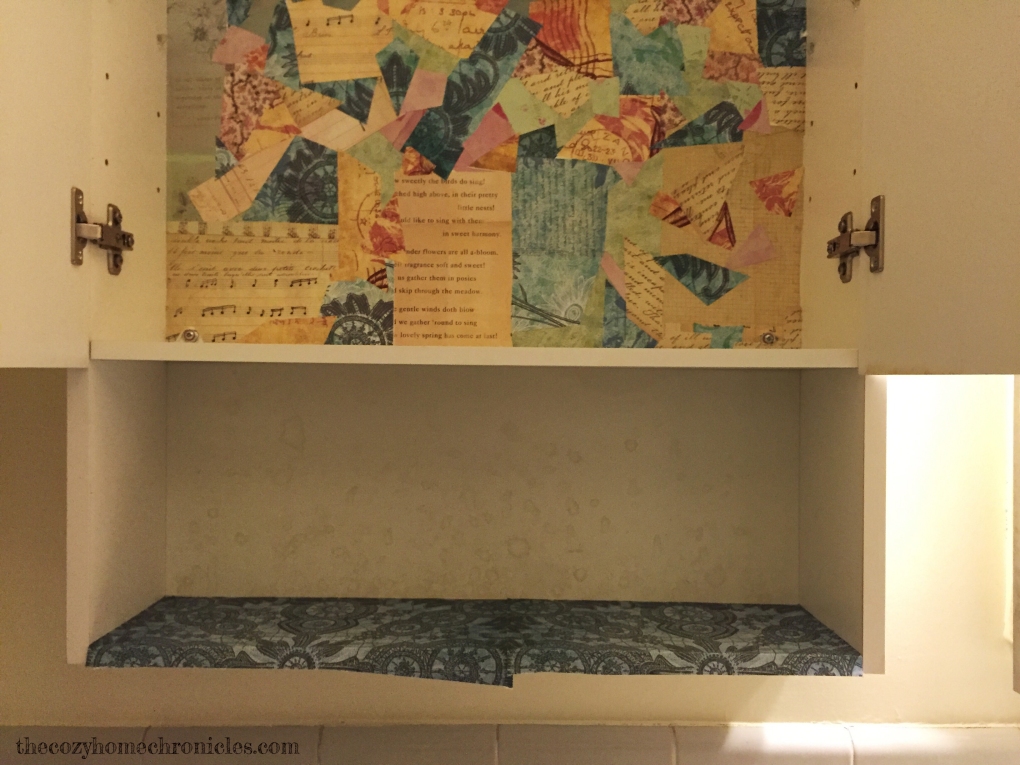
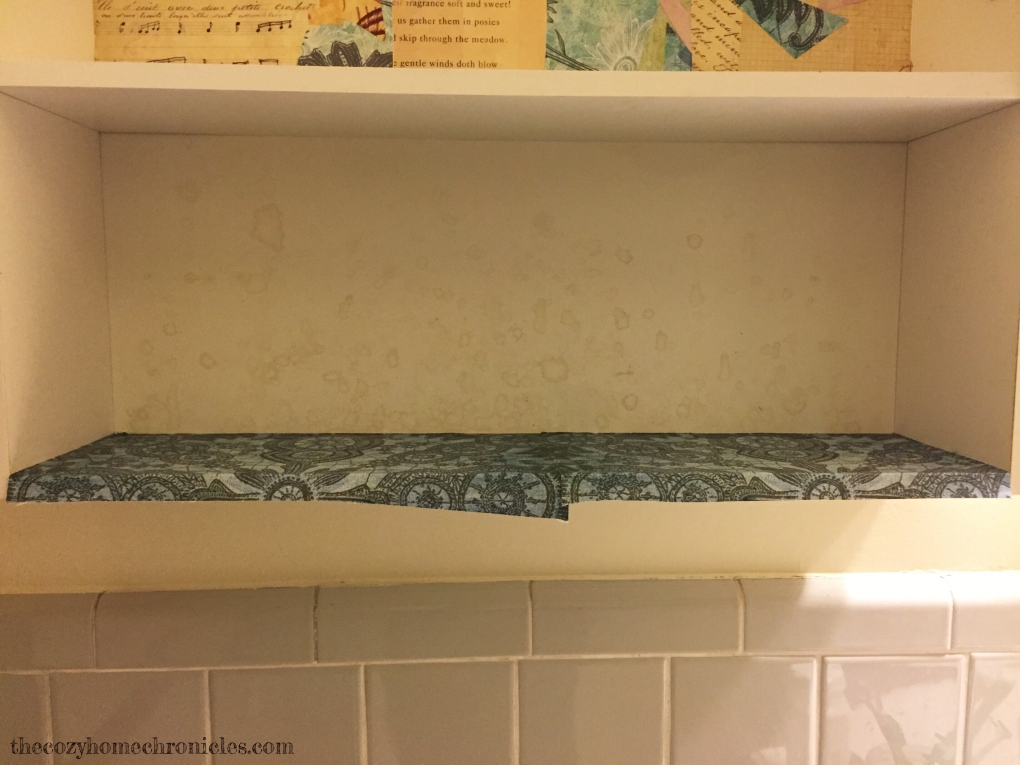
For the shelves I applied whole sheets of paper because it would have taken way too long if I did all of the cabinet as a collage. Make sure your paper is large enough to wrap around the shelf. Apply Mod podge and paper on one side. Let dry. Apply Mod podge on corner, press paper down and let dry. Fold paper on the unfinished side, apply Mod podge, and let dry. It’s that easy!

2016-02-02 20.32.39

Getting the books out to help get a clean, flat finish.

IMG_05433

My hodge podge design, using vintage styled paper, sheet music, florals, and pastels. I know it’s a bit quirky but I wanted something like that since nobody else would see it but us. For the visible parts of the cabinet, I stayed with a “safer” paper design that tied in with the light gray color scheme of our bathroom tile.

2016-02-02 20.37.14

I used an Exacto knife here to remove the excess paper before I sealed the edges.

2016-02-02 20.37.09

2016-02-02 20.32.25

Time to clean up the scraps and put the shelf back in.

IMG_0530

For us, the final product is such a breath of fresh air compared to the eyesore that it was. What do you think? Is this a project you would do? Any comments and suggestions are welcome 🙂

If you liked this post please follow us and share!


Home Theater System on a Budget

IMG_9367

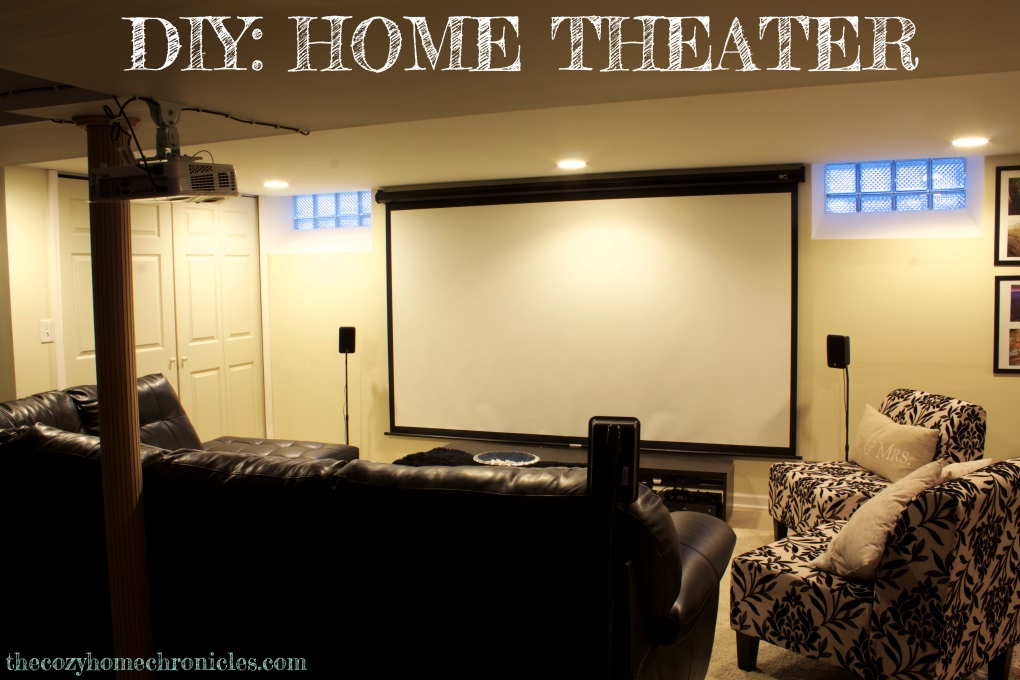
So after many years of renting apartments and one-story condos, I finally had my own place.  And what do you do when you discover that you have an empty basement? You build your own Home Theater! Right? Because, why not?

If you need more convincing, here are some reasons why building a home theater might be a great idea:

  • You enjoy television and gaming on big(ger) screens
  • You thoroughly want to enjoy your movie nights (think Lord of The Rings Epicness)
  • You don’t want a TV with average sound quality
  • You can’t afford a 120″ HDTV because last time you checked you didn’t have $130k to burnVizio 120 inch Tv.PNG

If any of those reasons resonated with you, you might be happy to hear that with a bit of elbow grease, you too can have the home theater of your dreams without the ridiculous price tag. Let’s get started!

Total Cost = $1,370 (tax not included)
Setup Time = 2-3 hours

What you’ll need

Note: You will always find “better” and more expensive products out there. What I have is a balanced system that allows for a great picture and sound at a very reasonable price.

Tools
Builder’s level
Pencil
Power Drill
Screws
Screwdriver
Allen Wrench
Drywall Anchors
A helping hand

Preparations and Planning

  • This design is for a 10×10 space and the sound system we chose has the perfect wiring for this size space. If you are working with a larger space you might want to pay attention to that.
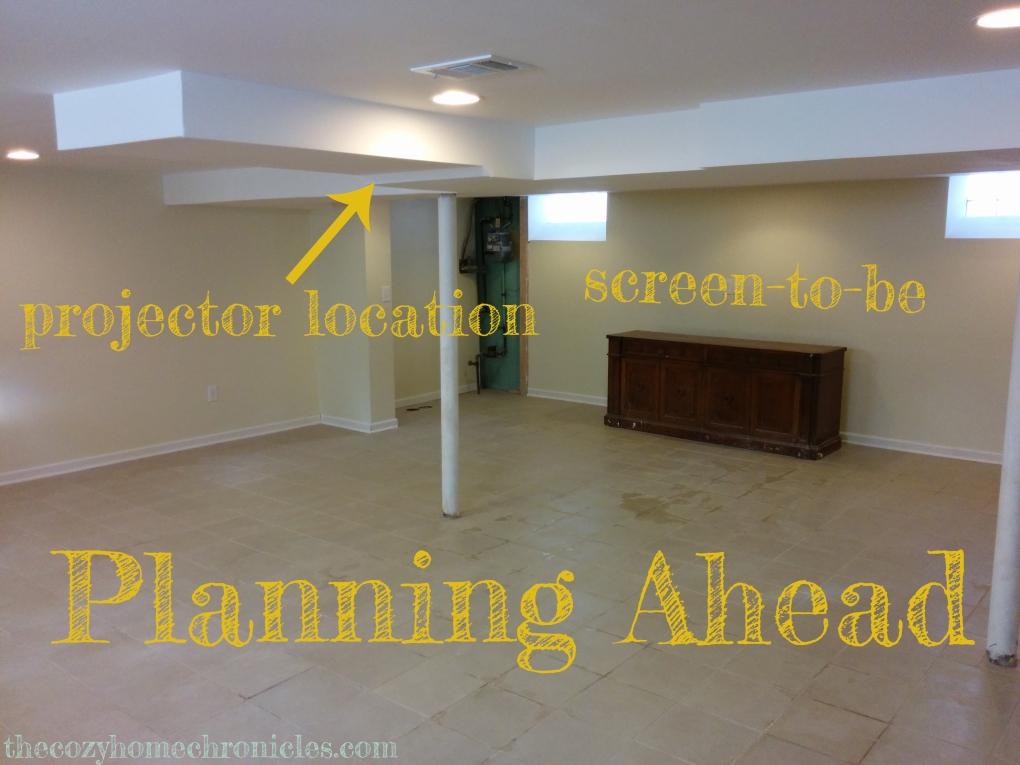
  • Designate a location for your projector where you will have a distance of at least 7-10ft from the screen to ensure an enjoyable viewing experience. I positioned the projector 10ft away from the wall that I wanted to install the screen on and I am very happy with the quality of the picture.
  • Decide if you want to have your projector mounted to the ceiling or have it portable. If you choose the portable route, you will need some kind of stand to position the projector on when in use. I went with the ceiling mount for safety and aesthetic purposes so you will find directions for ceiling installation further down.
  • Make sure you have an electrical outlet to plug your projector into especially if you are going to mount it to the ceiling. I installed one while I was finishing the basement because I knew that I eventually wanted to put up a projector.
  • When it comes to adjusting distance, viewing angle, focus and such, the benQ projector I picked has an enormous amount of configurations. So why benQ, you ask? Because most projectors won’t be as flexible when it comes to positioning! This projector will allow you to zoom in/out and shift the lens, which is very helpful when you don’t have the perfect room or space to set up a projector.
IMG_20140427_130039

Directions

A. Projector (if you are not attaching it to the ceiling you can skip to part B)

  1. These steps will cover fastening the projector to the ceiling mount. Note that the mount bracket comes with two separate parts that connect (see figure 1). The top piece is for securing to the ceiling wall and the bottom piece (the mount arms) is for securing to the projector.
  2. The first step requires you to connect the projector to the mount arms very carefully [The entire mount bracket comes with an extendable metal bar that is helpful if you have a high ceiling. I installed this in the basement (low ceiling) so there was no need for the extender. If you look at the above picture for the mount, you can see that there are 3 mount options. I went with the first one which skips adding the extender to the mount and installs the bottom mount piece directly to the top piece]. This was by far the longest and most time consuming step in this project and requires a great deal of patience and care to install the screws, through the holes in the arms, into the projector. You will need to tighten them well without damaging the projector’s pre-screwed holes. I was able to install 3 screws on the arms and skipped the fourth because it was difficult to align the 4th arm to the projector. Is it sturdy though? Even with just two screws I wouldn’t be worried.
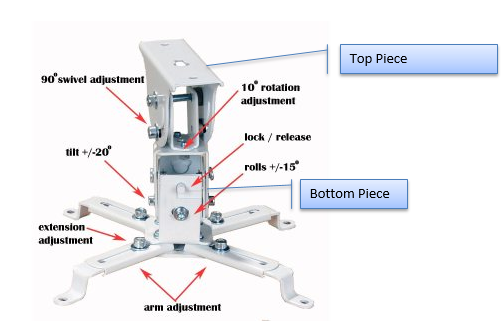
    Mount with new labels

    Figure 1

  3. After deciding on where you want to install the projector [I made sure there was a wooden bracket/stud where I was mounting the projector] you will need to hold the top mount piece in position and trace the holes with a pencil.
  4. Proceed to drill two small holes over your marks then hold up the top mount piece while you drill it securely in place with the screws. [Note that you can adjust the projector using the tilt and rotation adjustment options in the top piece so don’t worry if it isn’t 100% level as you are mounting it. As long as you are aligned with the wall in front of you, you will be fine.]
  5. Once you have finished securing the top piece of the mount to the ceiling you can hook the two pieces (top piece+bottom with projector) together and tighten using the allen wrench. Now on to the screen!
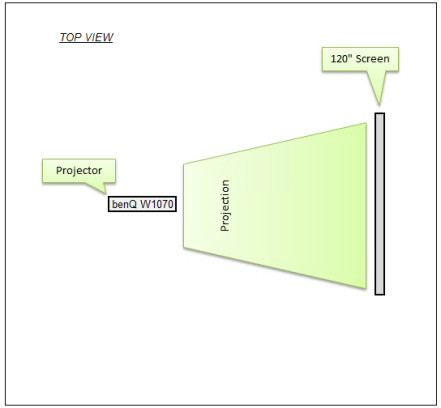
    Projection design.PNG

    Figure 2

B.  Projector Screen

  1. Next you will need to install the 120 inch projector screen. You first need to make sure it is positioned in the center focal point of your projector (see figure 2). Once you have your position all set, you will need to mark with a pencil the upper right and left corners of the wall where you will secure the projector screen ends.
  2. Drill a hole in each of the marks you made (2 total) and screw a drywall anchor in each hole.
  3. When you have finished you will need to use a screwdriver to gently screw two heavy duty screws in place, leaving 1/2 inch distance between the wall and the screw head. Now, with a helping hand, hook the projector screen end caps (see figure 3) onto the screws. Make sure the screen is level horizontally and vertically against the wall.
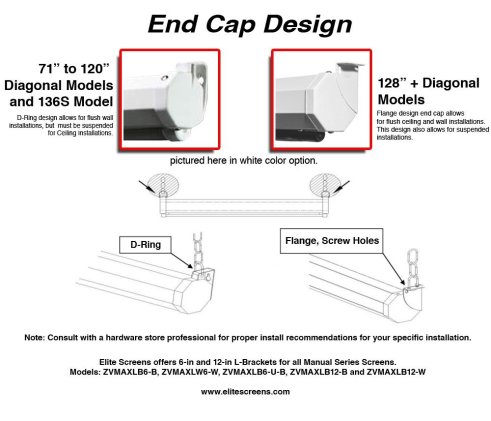
    Screen install.jpg

    Figure 3

  4. At this point you can turn on the projector and fine tune the alignment on the ceiling mount bracket. You can also fine tune the zoom on the projector. This will be different for every installation since the distance to the screen, the projector height and mount is never identical.

C. Surround Sound System

  1. Installing the 5.1 surround sound system isn’t complicated as the package comes with all the wiring you need. Here’s what comes in the box: 4 Satellite Speakers, 1 Center Speaker, 1 Subwoofer, 5 black & 5 red tip wires + Subwoofer Cable
  2. Connect each of the four satellite speakers to a speaker stand and place one satellite speaker in each corner of the space. Connect the wires from each speaker to your main sound system.
  3. Install the center speaker right below your projector screen and find a good location for your subwoofer. The manufacturer recommends a close (but not too close) location to your seating area. See figure 4 for reference on how I placed my speakers and subwoofer.
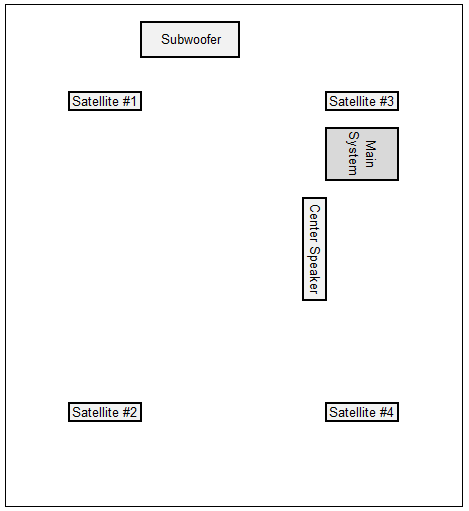
    Speaker setup

    Figure 4

  4. After installing and connecting all your wires back to the main system, you will have to turn it on and open the sound settings to adjust everything. This can take 15-20 minutes to get it right.
  5. Using your projector as a screen, assign every speaker a location. For example: Satellite speaker #3 is the Front Left speaker while Satellite speaker #4 is the Front Right speaker and so on. After doing this for all the speakers, you have to fine tune the sound by using a Sound Level device [or if you are a smartphone owner just download one of the many free apps on iOS or Android] to calibrate the speakers. To do this properly, you will need to be sitting in the middle of the space where you are installing the speakers. The Denon guide will walk you through this step-by-step if you get stuck.
  6. Last but not least connect the 15 ft HDMI cable from the projector to the Denon sound system. From there, connect the second HDMI cable from the Denon sound system to your Blu-ray, Apple TV, Xbox or whatever it is that you are using and turn on your devices to make sure it’s all working fine.
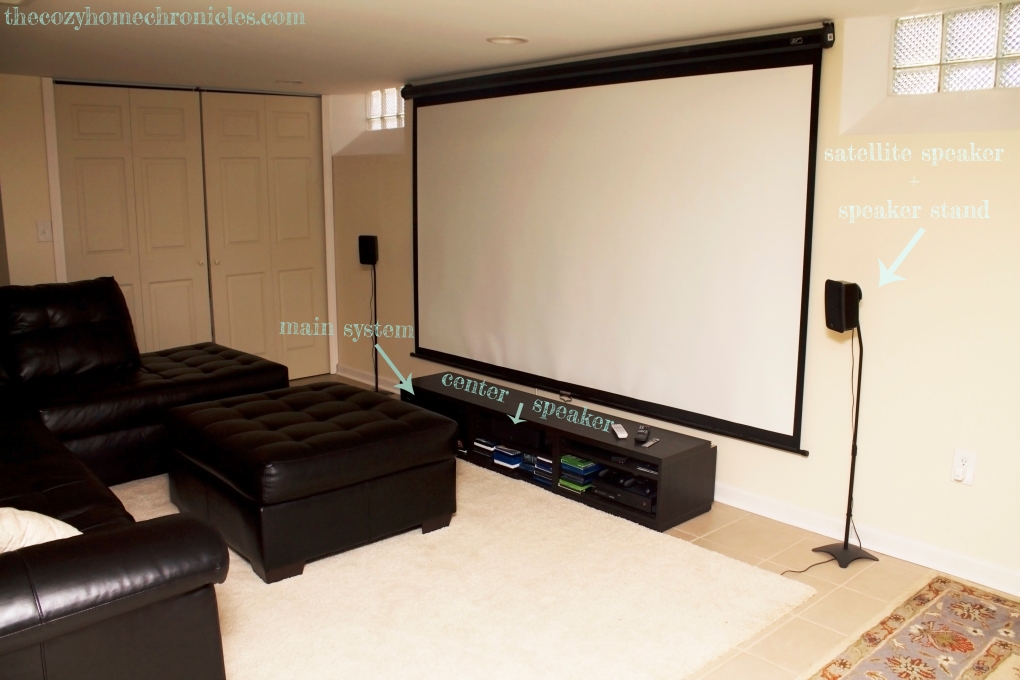
IMG_9141

Once you are done with the setup, all that is left to do is clean up and complete your space with a nice rug (to hide all the wires), comfy seating, decor, and a budget friendly Ikea TV stand (to hide your central speaker and organize any devices, games, or DVDs you have).
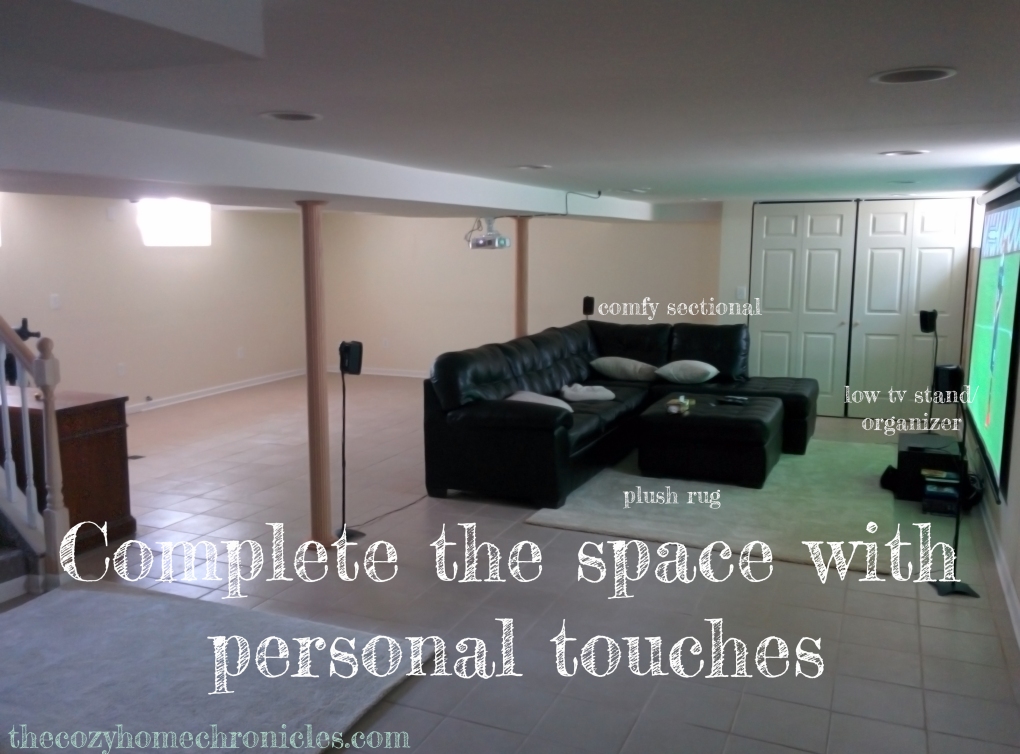
IMG_20140615_154914

Of course, don’t forget to take a moment to…

IMG_20140615_154901

Now call up some friends or family, pop some popcorn, pull out FIFA 16′ or Inception and revel in the thought that you will never need to spend money at the movies again. Seriously, we have only gone out a couple times in the two years since we put this together and that was for The Hobbit and Interstellar! Let us know what you think about this project and if it is something you would consider doing. Until next post, may an evening star shine down upon you 😉
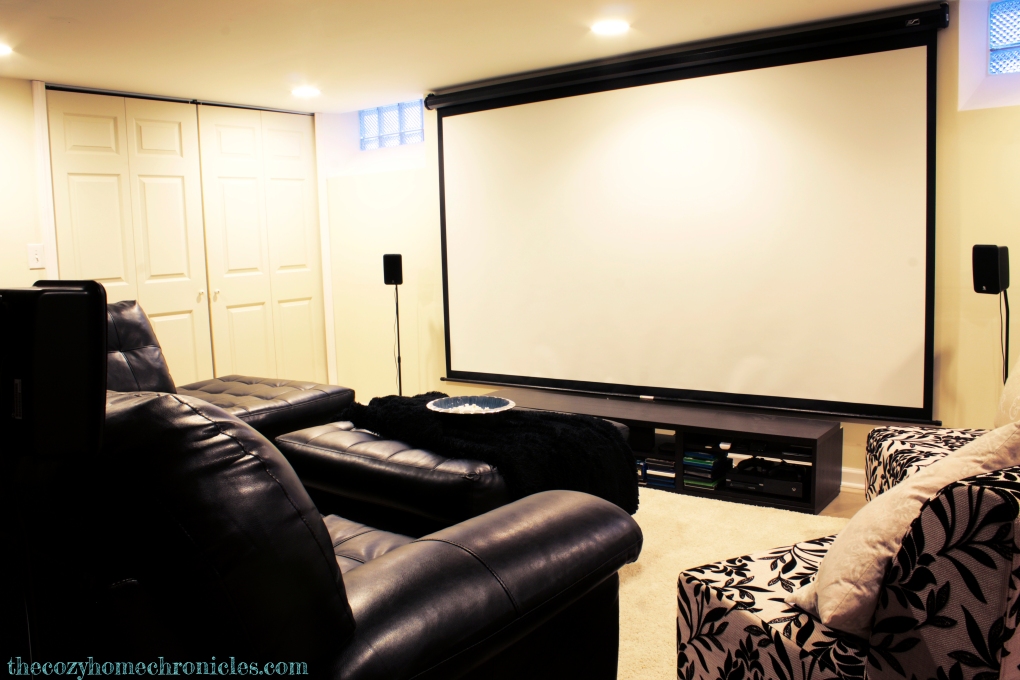
IMG_9368

Below are two short clips showing the sound, picture and overall setup taken with an iPhone 6s.

Home Theater Demo #1 from sammyandsufi

Home Theater Demo #2 from sammyandsufi

If you liked this post please follow us and share!